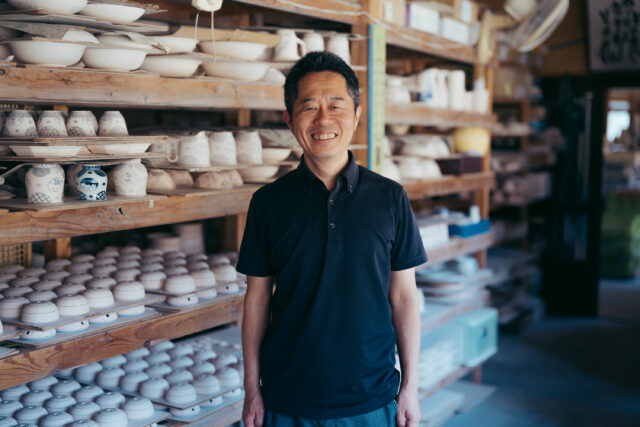
Interview: Shinbe Sakakura XVI (Ceramic Artist)
VOICE VOL.8
VOL.1-8
Update
VOL.1-53
Update
VOL.1-26
Update
VOL.1
Update

VOL.1-27
Update
VOL.1-4
Update
VOL.1-27
Update
VOL.1-4
Update
VOL.1-3
Update
VOL.1
Update
VOL.1-32
Update
VOL.1-12
Update
VOL.1
Update
We share a variety of information and perspectives on Japanese crafts, including exhibition information and interviews.
VOICE VOL.8
Featured Exhibitions & Events VOL.53
New Products VOL.26
Travel Guide VOL.1
Mar 19 – Mar 29, 2026
Seiko House Hall
Mar 20 – Mar 24, 2026
SHIBUYA KURODA TOEN
Mar 20 – Mar 29, 2026
Kashima Arts
Mar 20 – Mar 29, 2026
TOBETOBEKUSA
Located in the Hokuriku region of Japan, Ishikawa Prefecture is a place shaped by history and craft. Kanazawa, the prefectural capital, flourished during the Edo period as the castle town of the Kaga domain ruled by the Maeda family. At the time, the domain was assessed at over one million koku, a traditional unit measuring rice yield and thus economic power, making it one of the wealthiest regions in Japan. It came to be known as “Kaga Hyakumangoku,” a name that still evokes its historic prosperity today. Across Ishikawa, diverse craft traditions continue to thrive. Kaga-yuzen silk dyeing, Kanazawa lacquerware, Yamanaka lacquerware, and Kutani ware are among the many forms that have taken root here. The techniques and aesthetic sensibilities cultivated over generations have been carefully carried forward into the present.
This guide introduces the Komatsu and Kaga area of Ishikawa Prefecture. Easily accessible via Komatsu Airport, the region’s gateway by air, it is well suited to travelers arriving from abroad. Here, our editorial team introduces places we have personally visited, where the distinctive culture and craftsmanship of Komatsu and Kaga can be experienced firsthand.
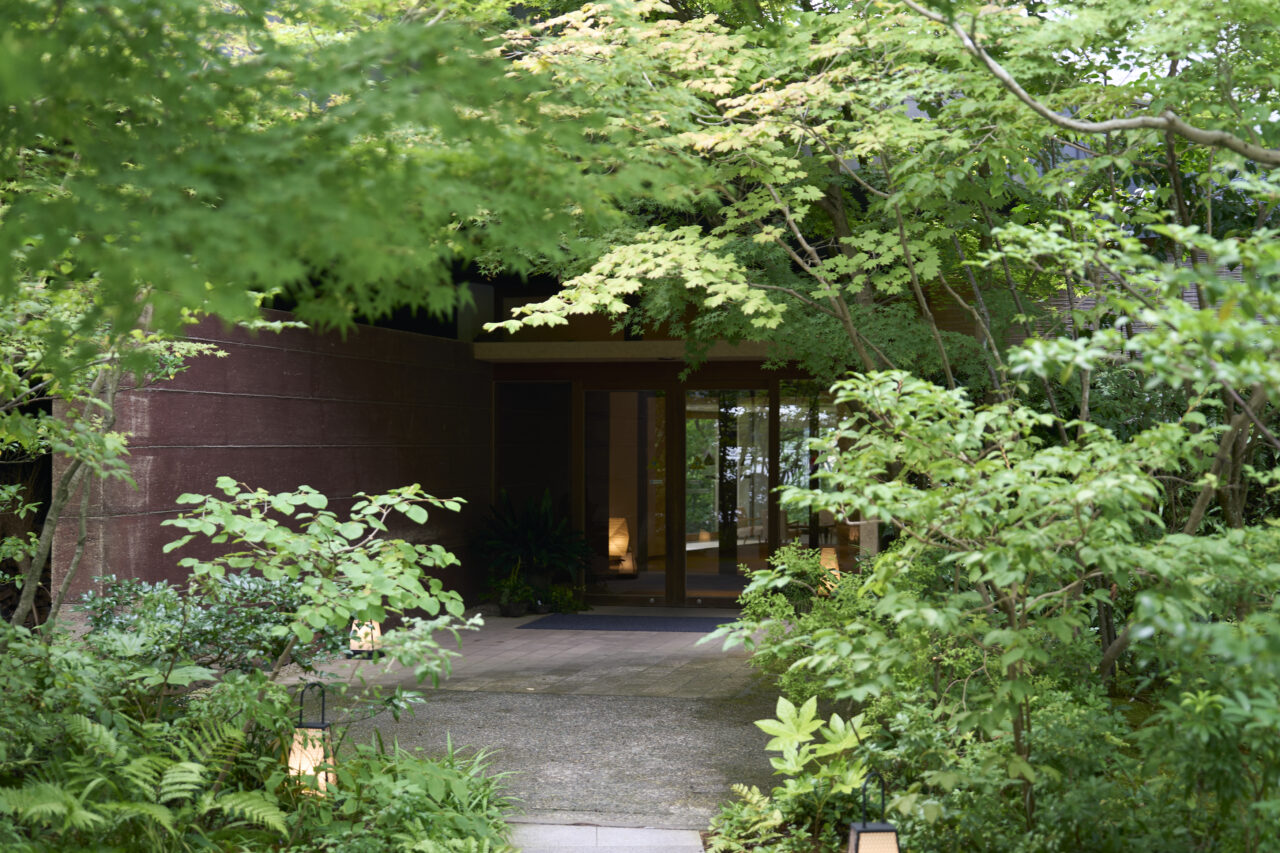
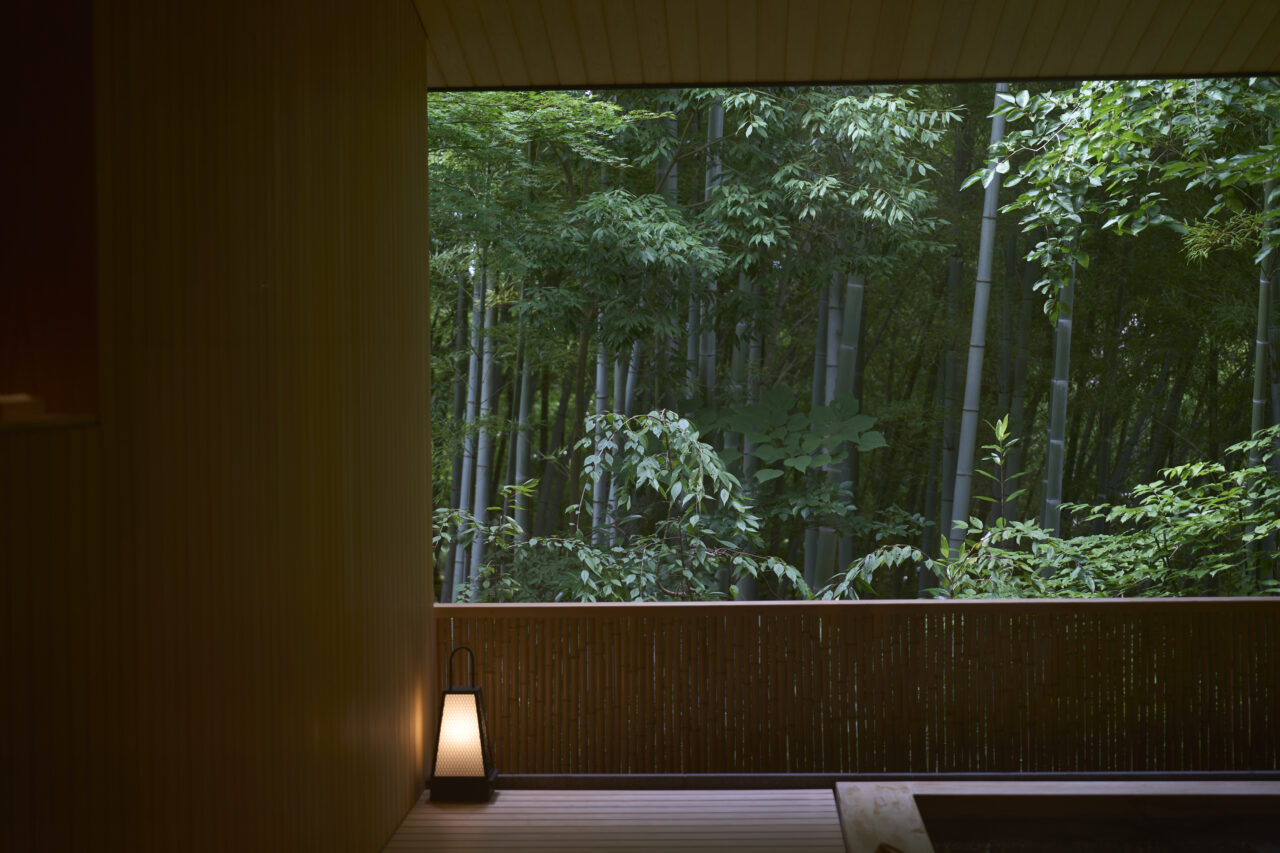
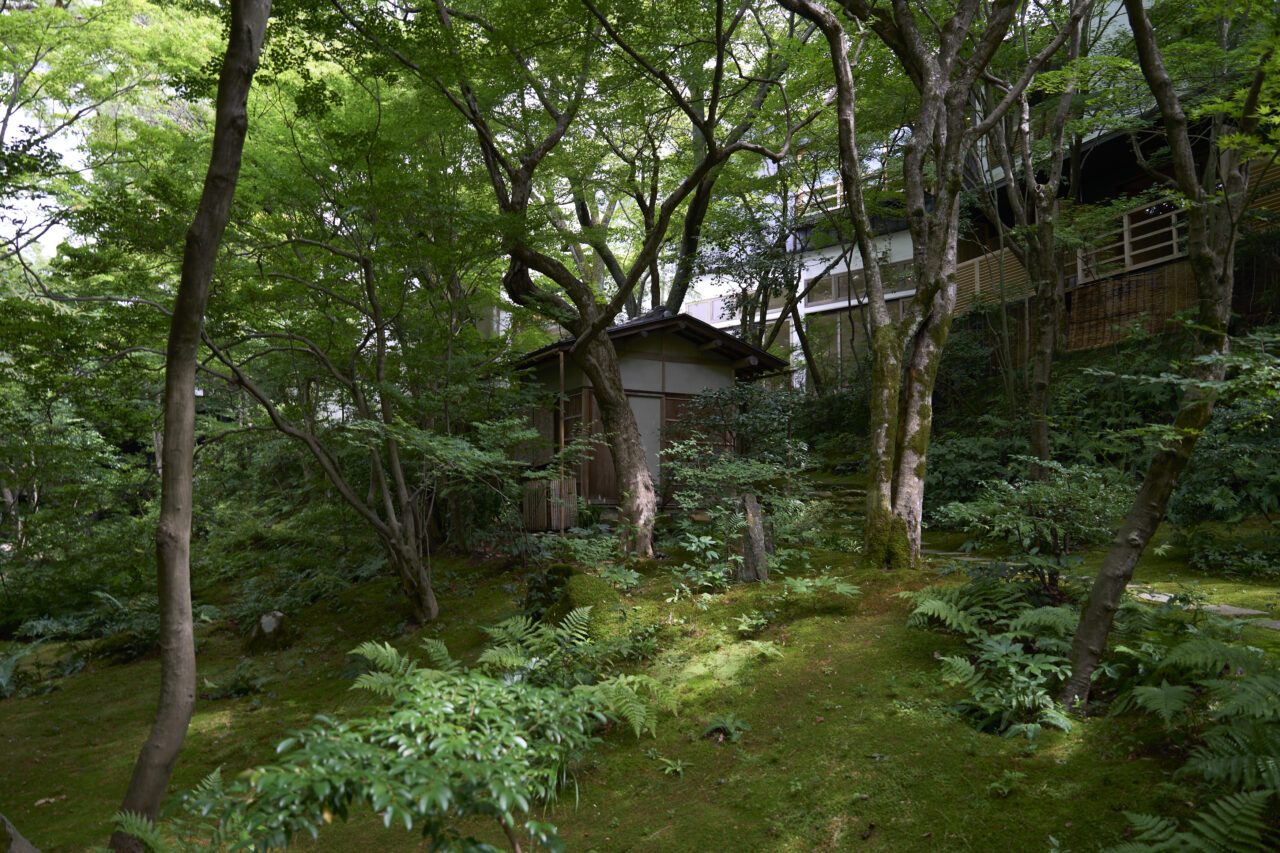
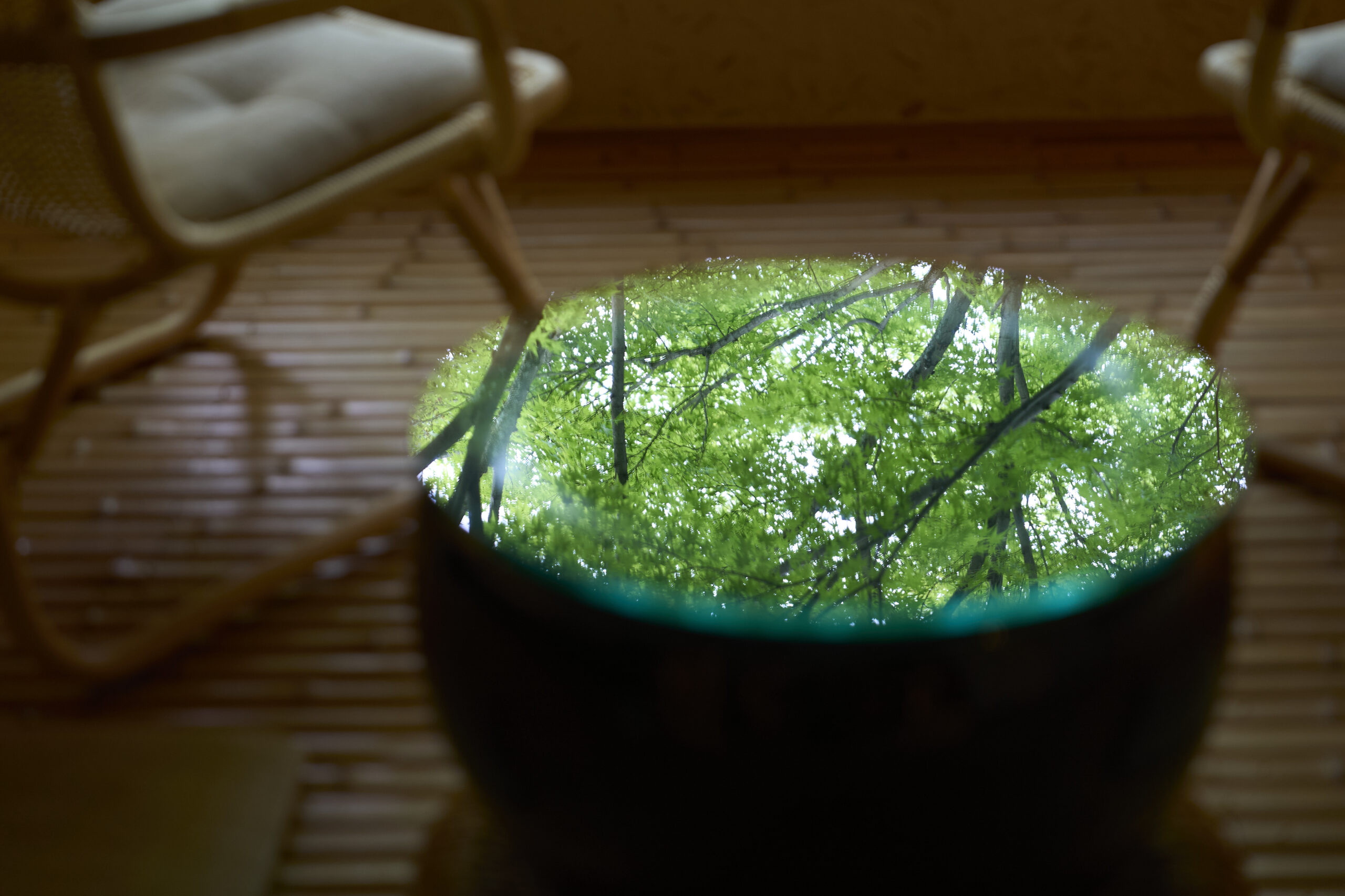
Yamashiro Onsen, a historic hot spring town in Ishikawa Prefecture, marks 1,300 years since its founding. Beniya Mukayu stands quietly on a hillside once known as Yakushiyama (the Healing Buddha’s Mountain) within this storied spa town, on the former site of the main hall of Yakuoin Onsenji Temple, a sacred place associated with the Hakusan faith, a mountain-based spiritual tradition centered on Mount Hakusan, one of Japan’s revered peaks. Since ancient times, Buddhist monks are said to have healed visitors here through therapeutic bathing and the preparation of medicinal herbs. Mukayu means “richness in emptiness.” The inn is a place well suited to those who wish to step away from the pace of daily life and turn inward in quiet reflection. Since 2008, the inn has been a member of Relais and Chateaux, the international association of distinguished hotels and restaurants, and has earned recognition abroad as well. Within the grounds are the Kaiseki Horin restaurant, offering refined, multi-course seasonal Japanese cuisine, Spa Entei, and three libraries, each with a unique atmosphere. Surrounded by nature, guests are invited to spend restorative time for both body and mind. The Yakushiyama Treatment at Spa Entei, incorporating hot spring waters and medicinal herbs, is especially popular and draws many returning guests. All sixteen guest rooms feature private open-air baths overlooking the Forest Garden, allowing visitors to enjoy the hot springs at any time. Many guests also take pleasure in observing the varieties of moss that grow throughout the garden. Those staying two nights or more may request for Private Unique Experiences such as wood-turning, a craft tradition of the region. Here, one can immerse oneself fully in the quiet depth of Japanese aesthetics.
Address: 55-1-3 Yamashiro Onsen, Kaga-city, Ishikawa Prefecture 922-0242, Japan
Instagram: https://www.instagram.com/beniyamukayu/
Website: https://mukayu.com/
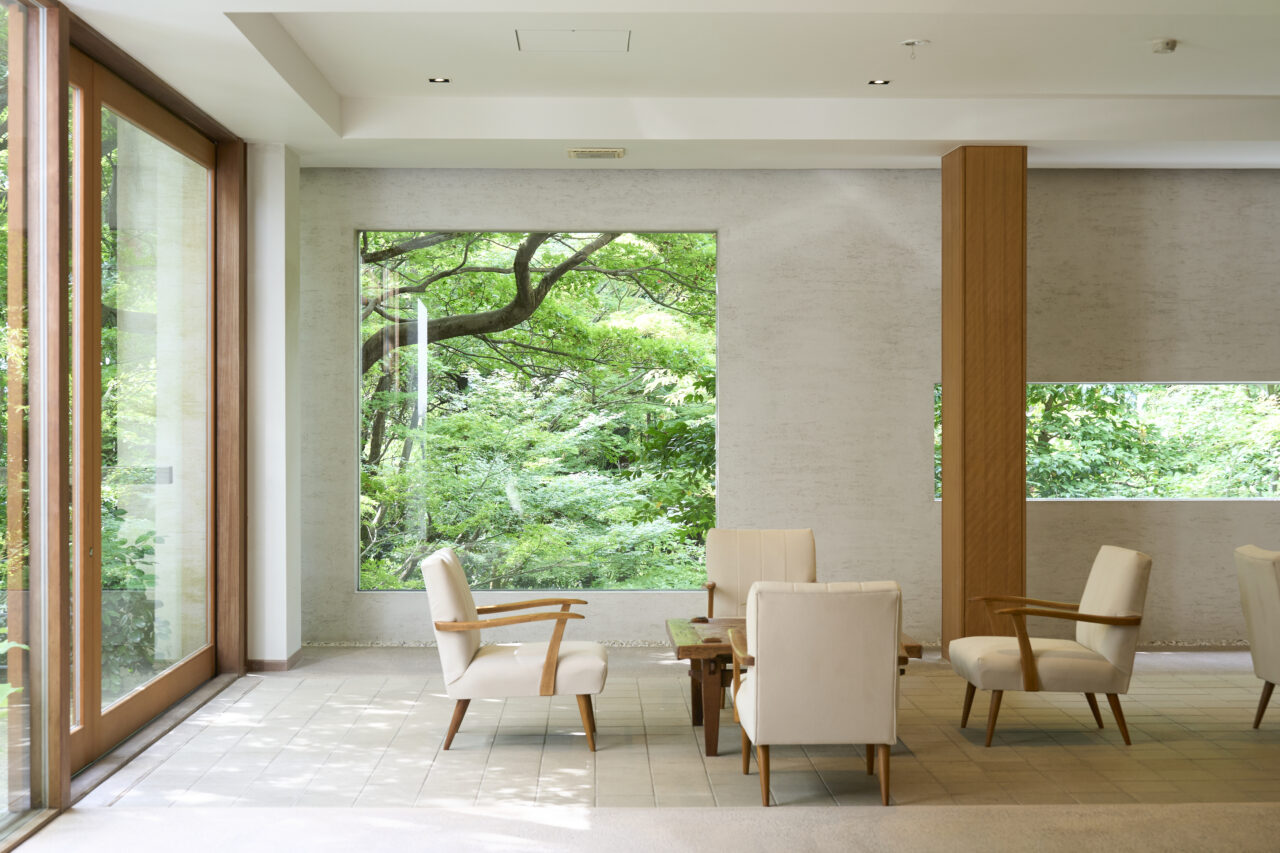
Sunlight filtering through the trees into the lobby
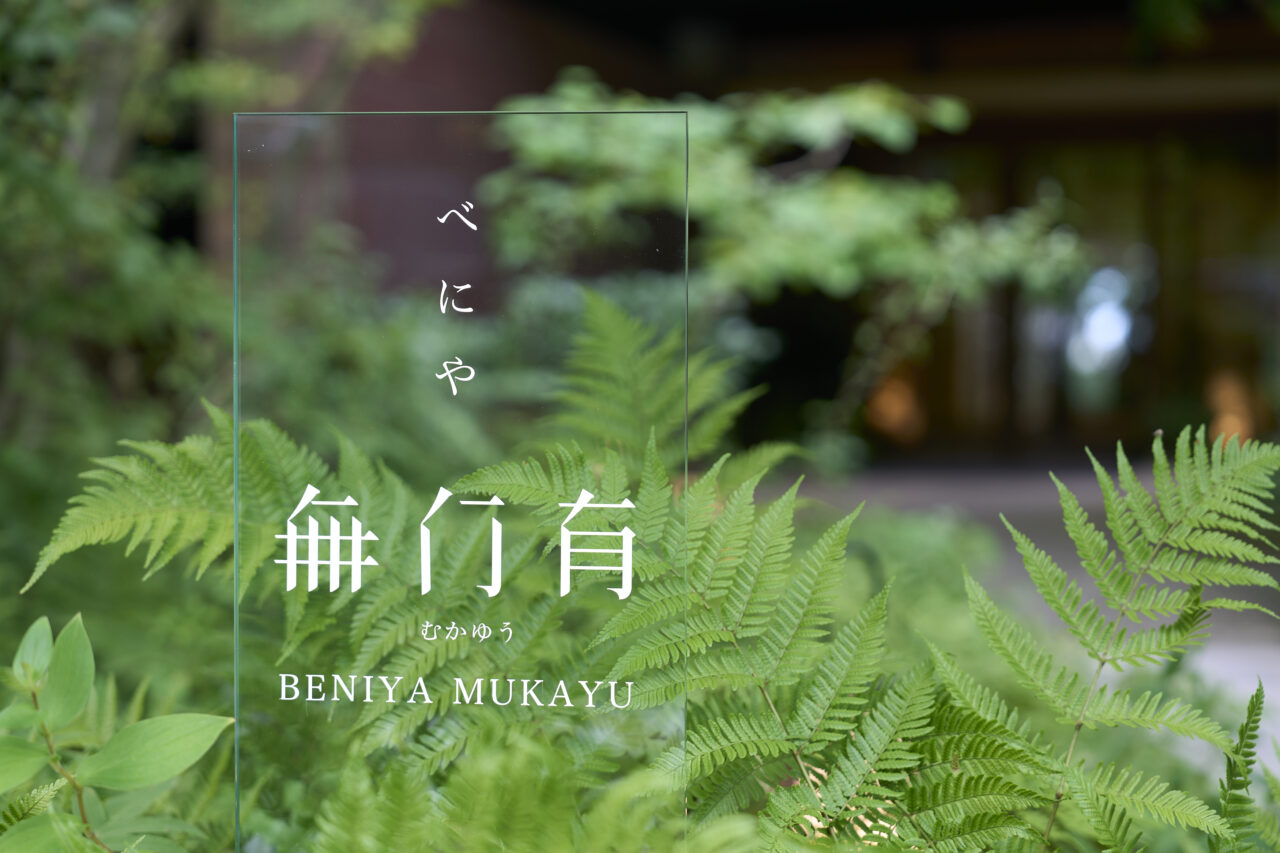
Logo by graphic designer Kenya Hara
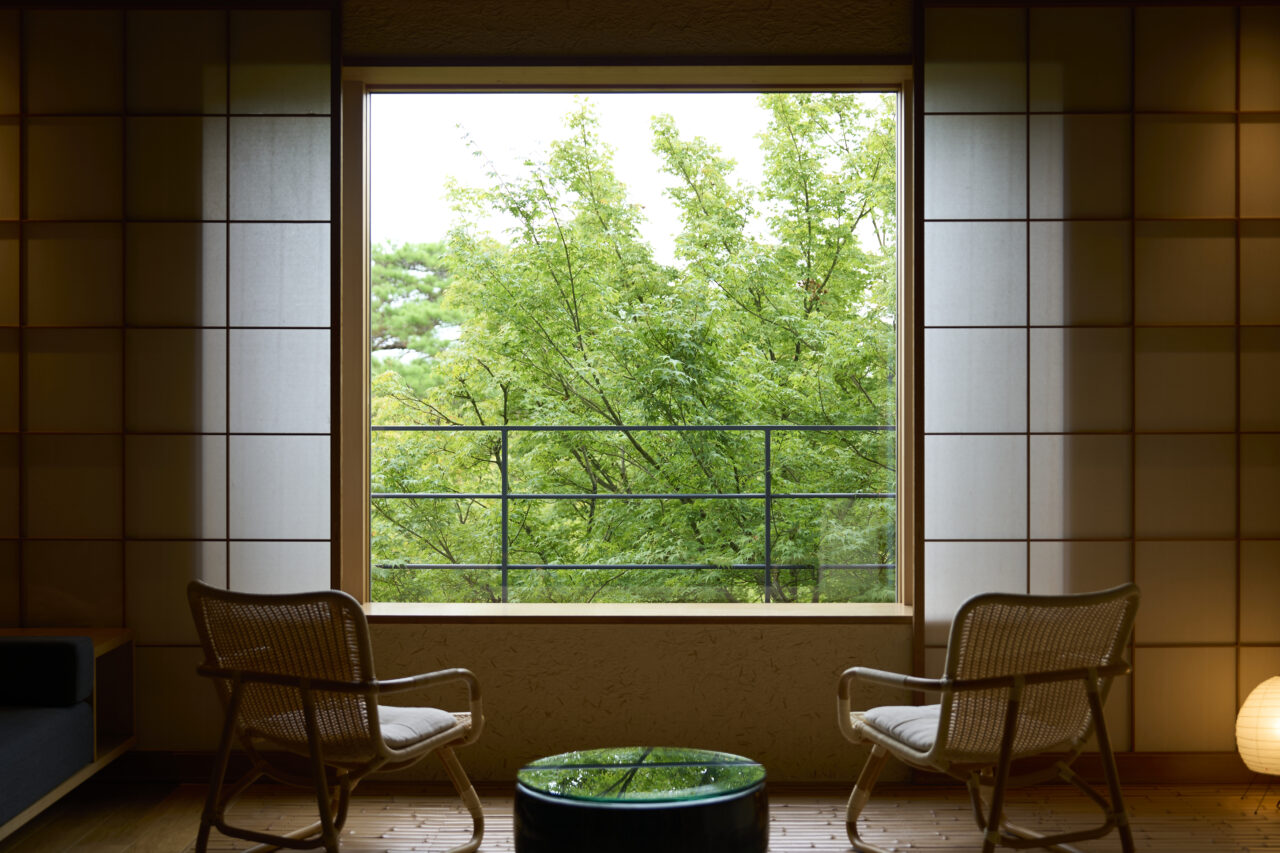
Views of the Forest Garden, reflecting the changing seasons
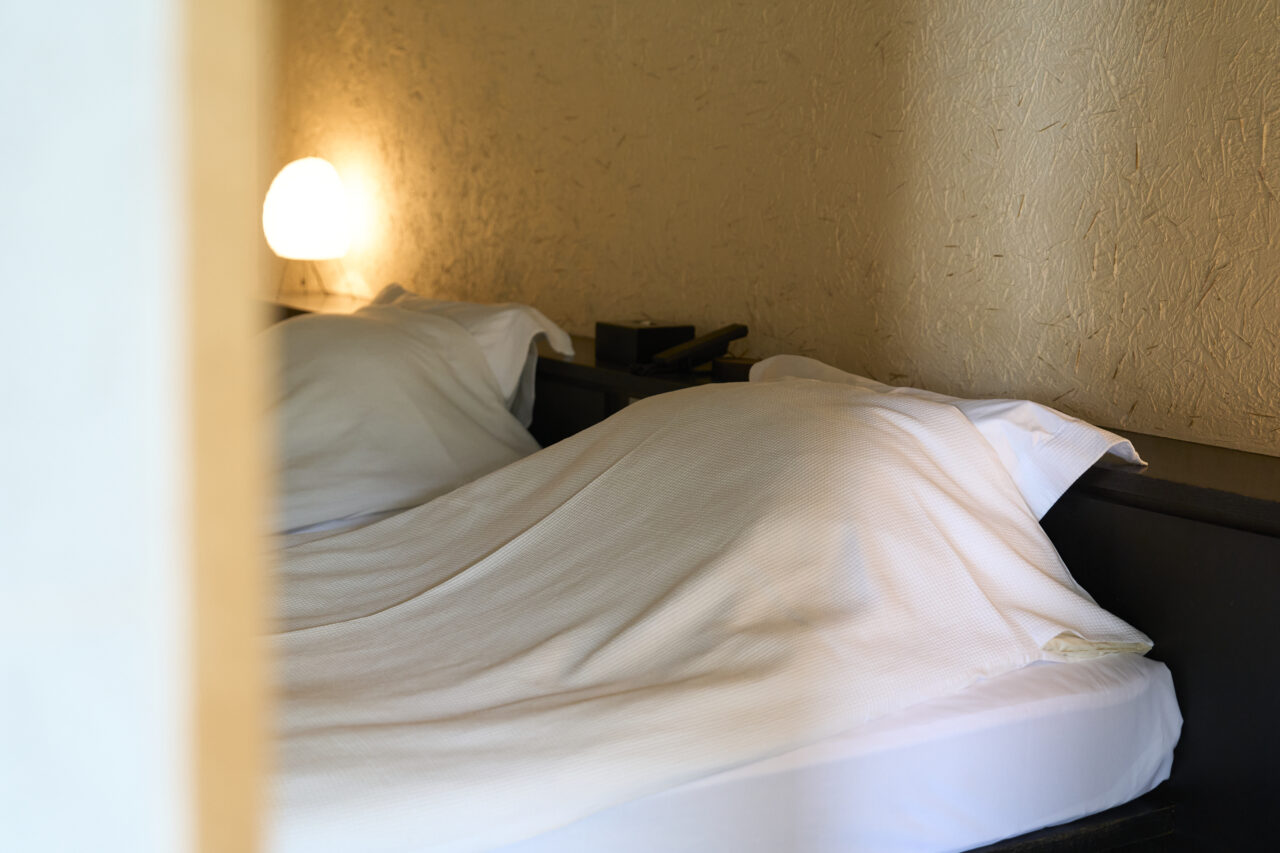
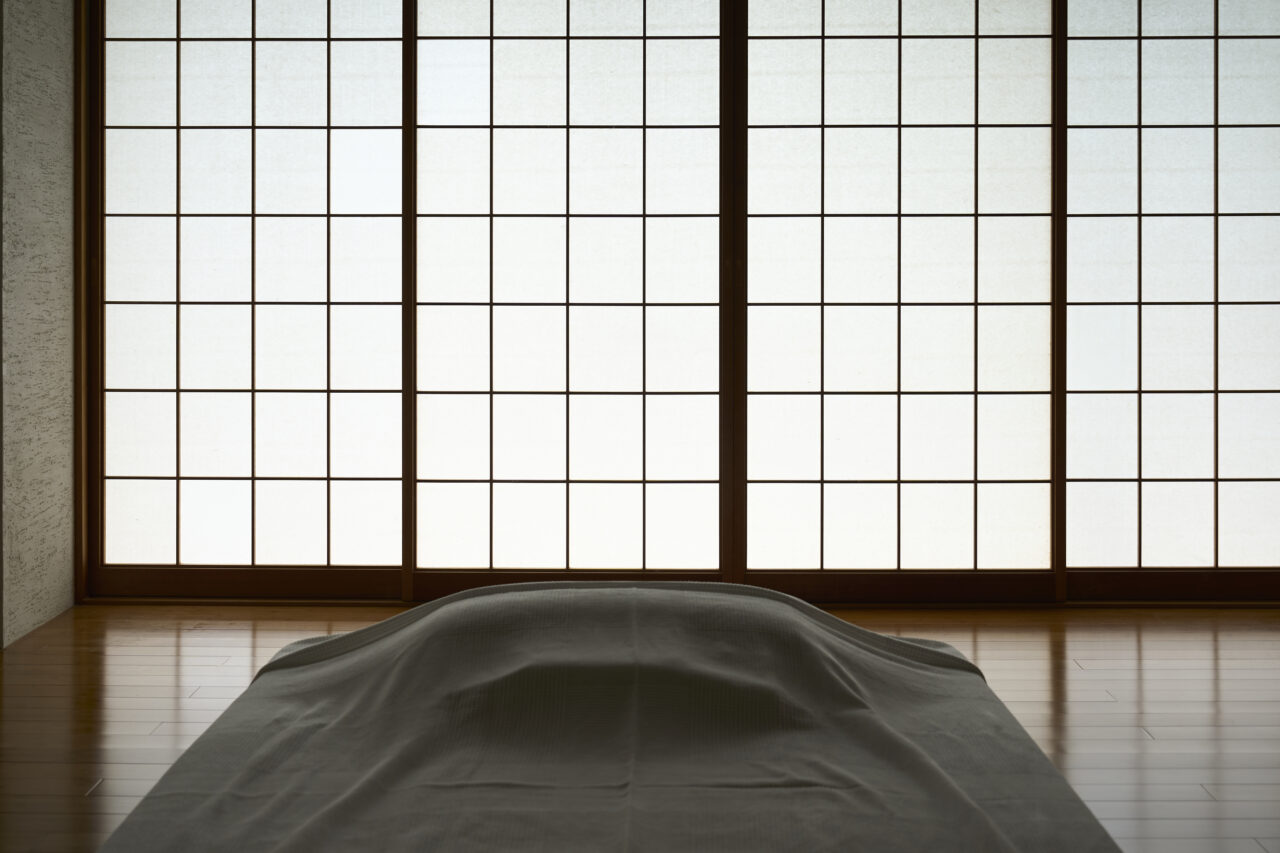
A serene bedroom
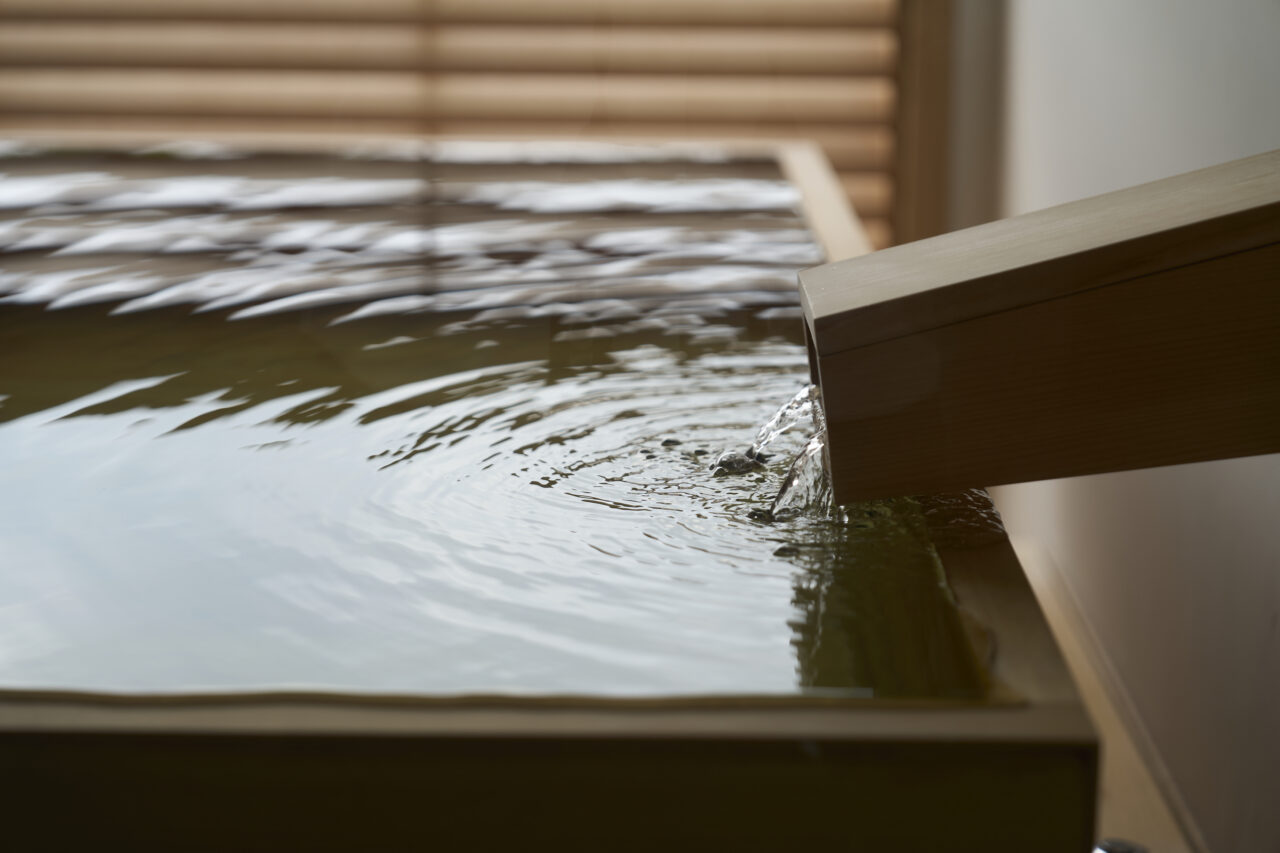
Yamashiro Onsen hot spring waters, with a 1,300-year-old history
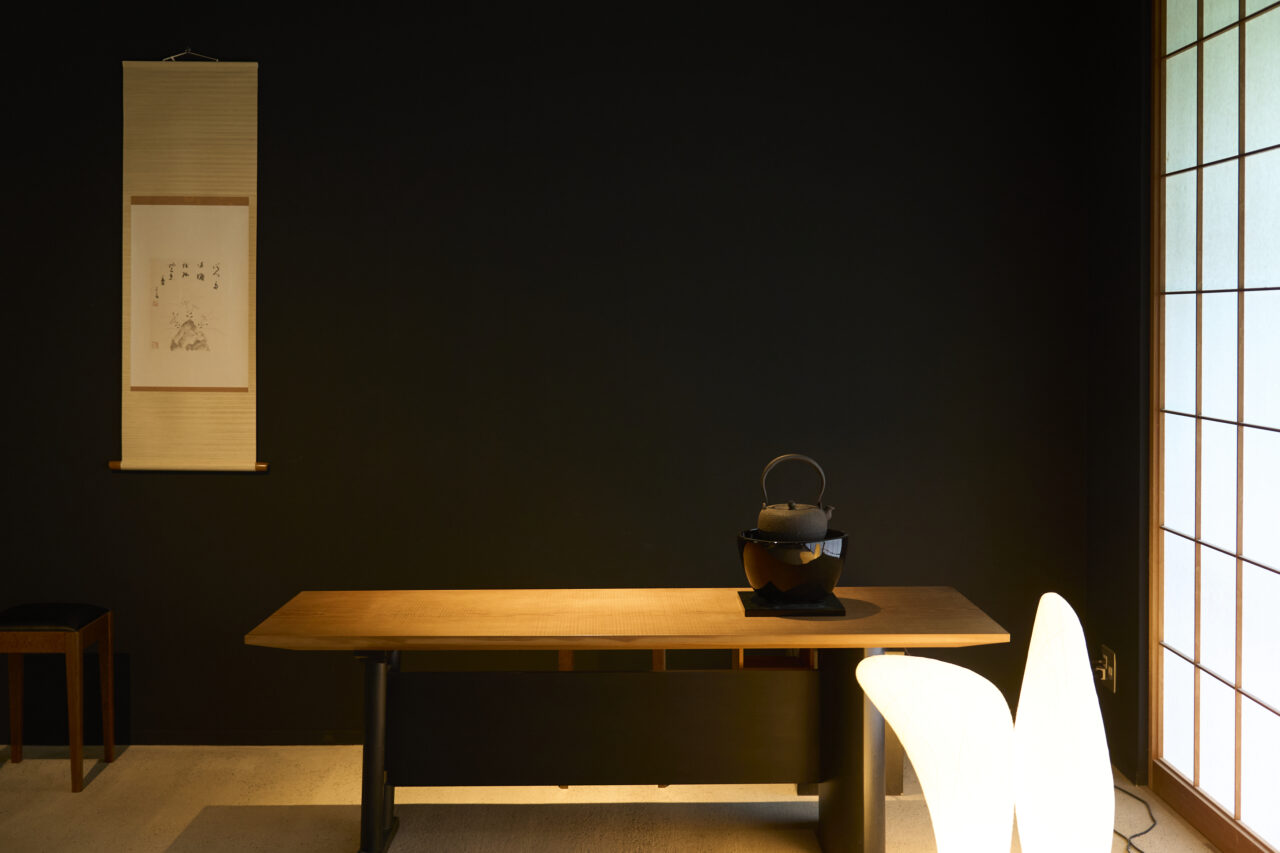
Tea Ceremony conducted by the owners
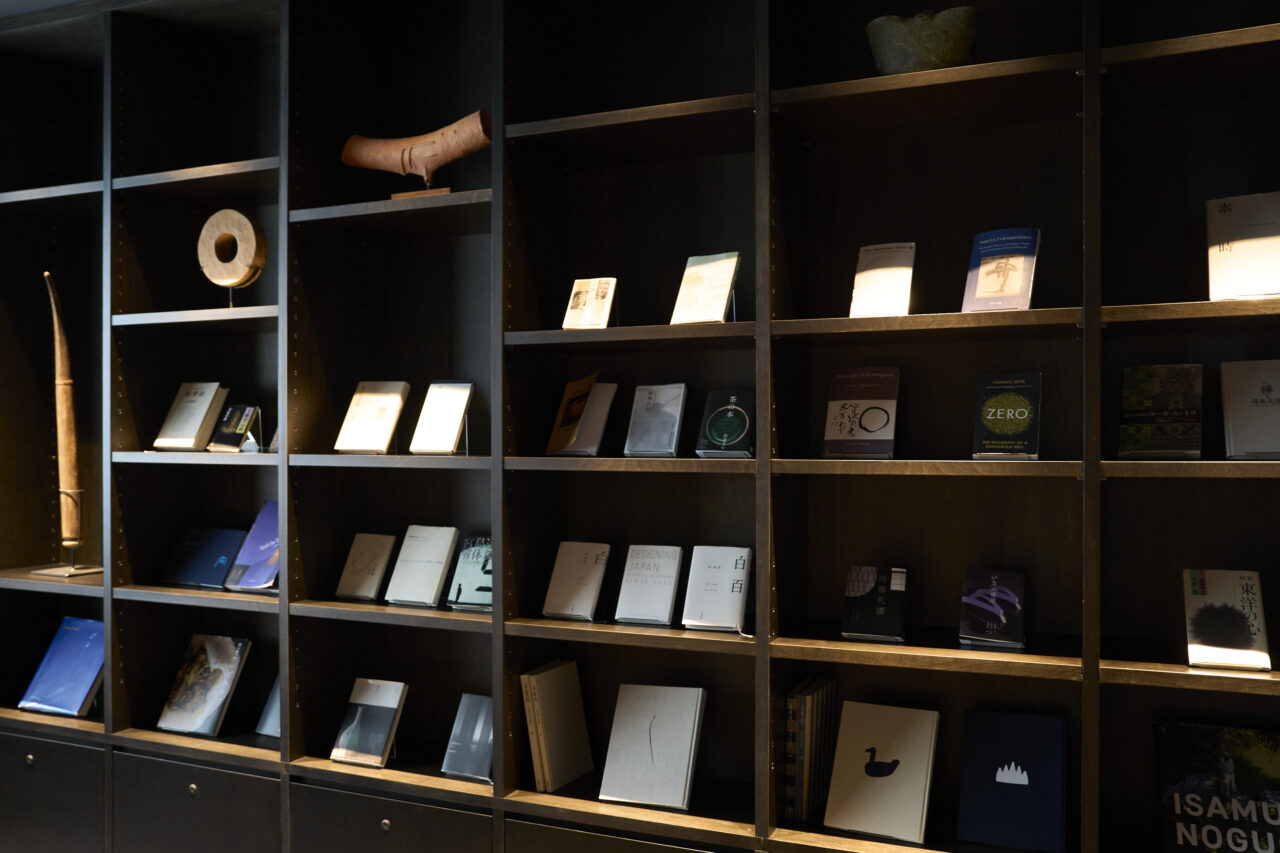
Three libraries, each with a unique atmosphere
Spa Entei treatments incorporating medicinal herbs
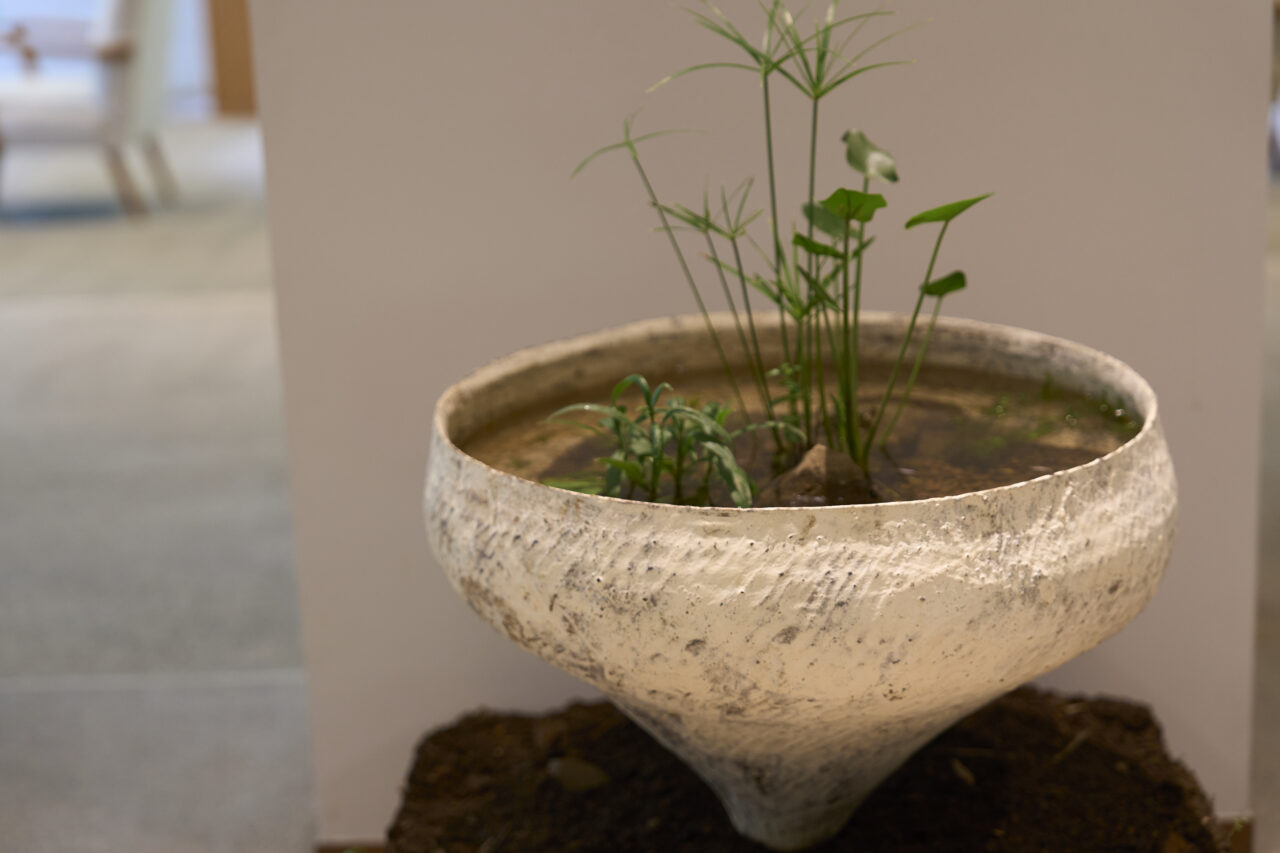
An artwork by ceramic artist Akihiro Nikaido on display in the lobby
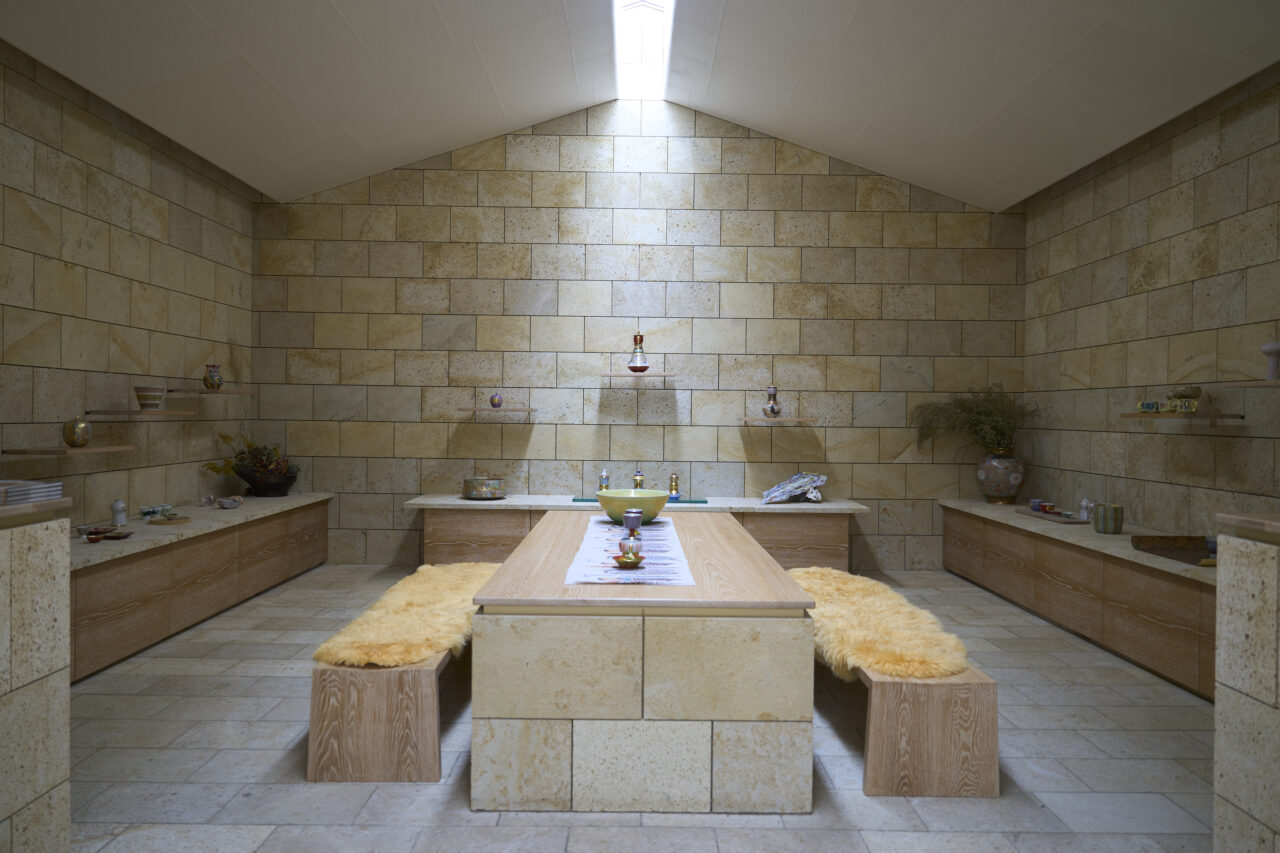
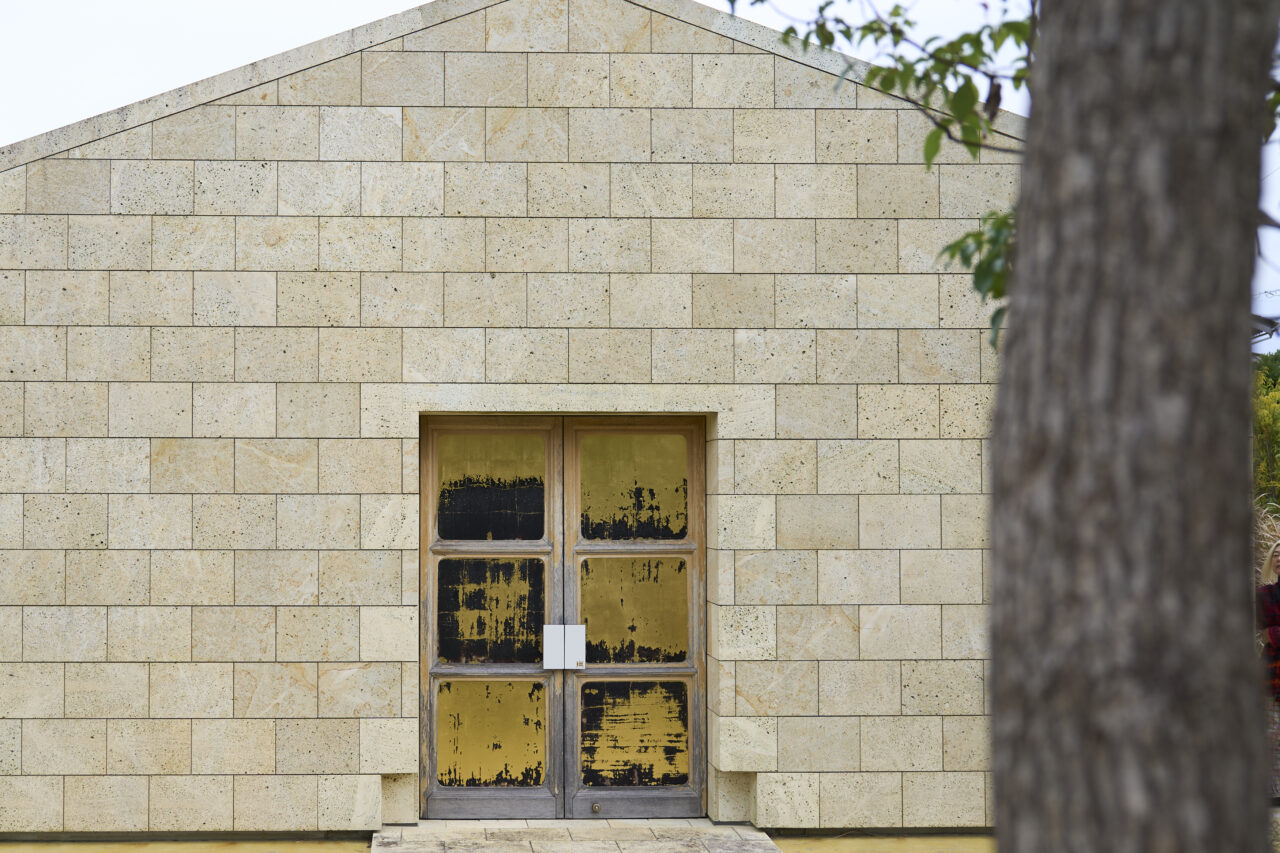
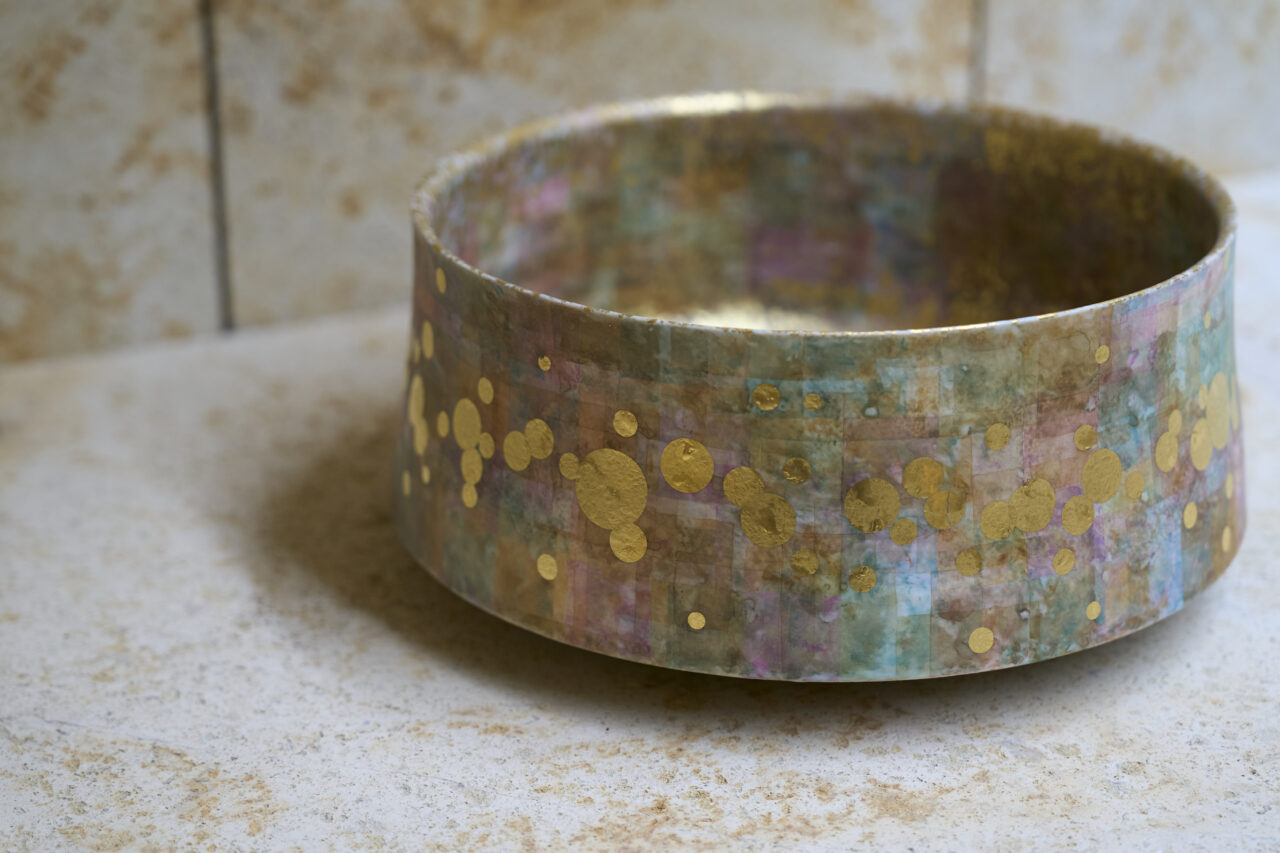
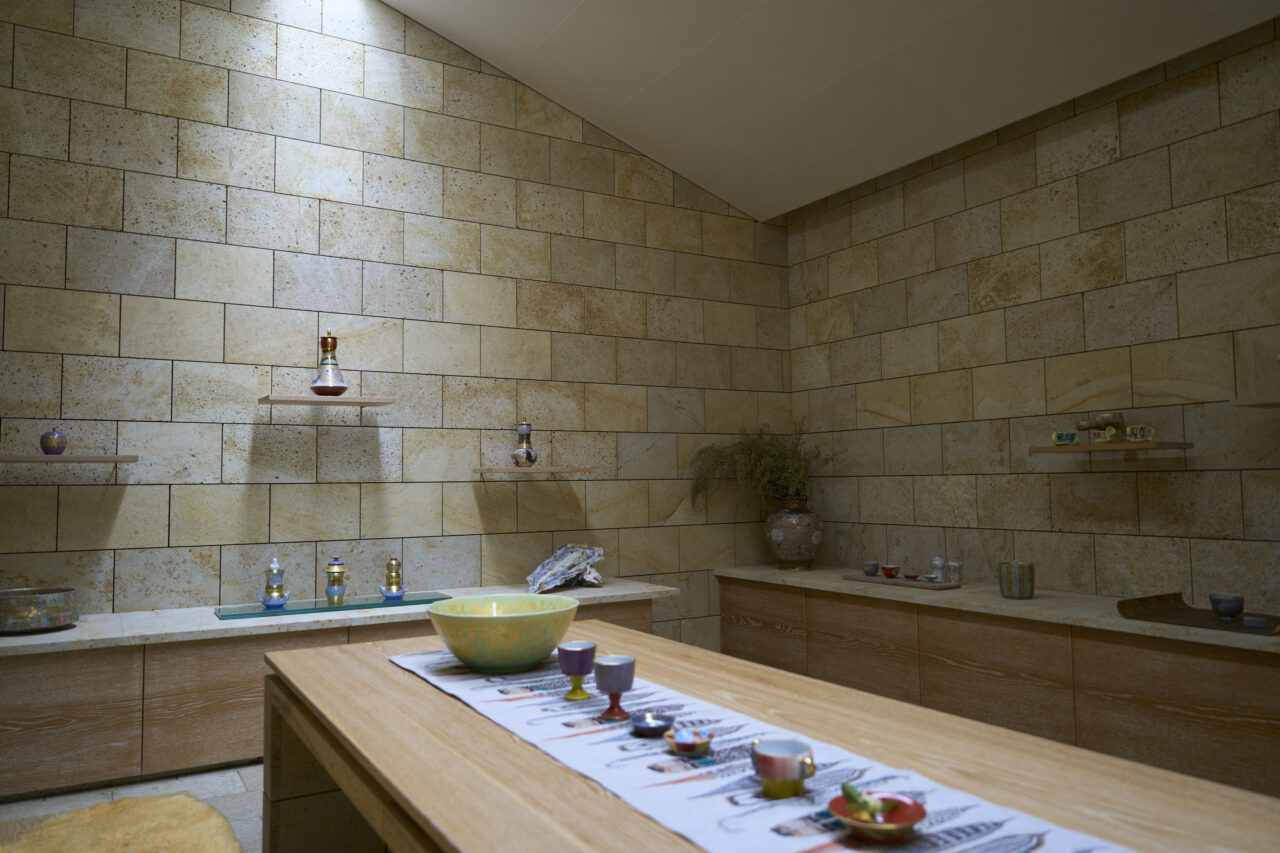
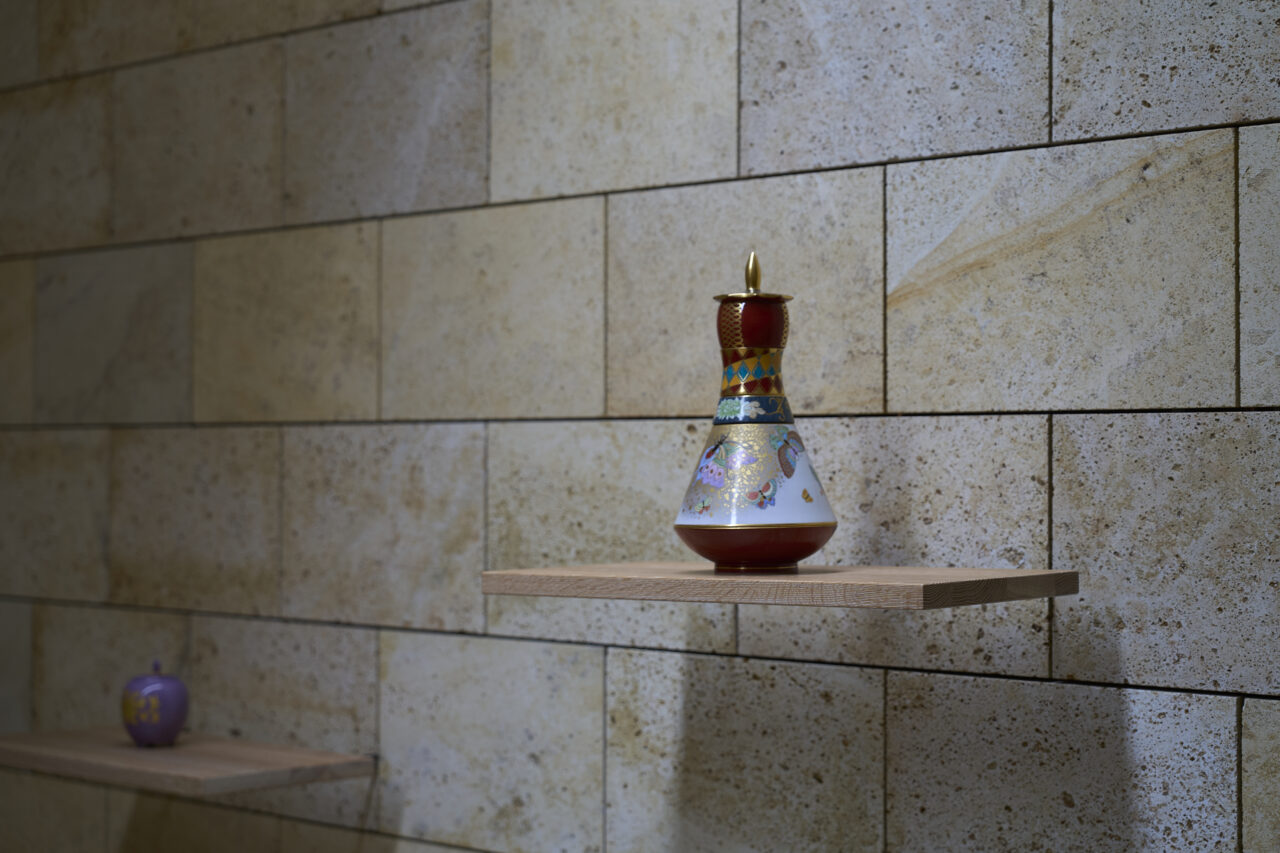
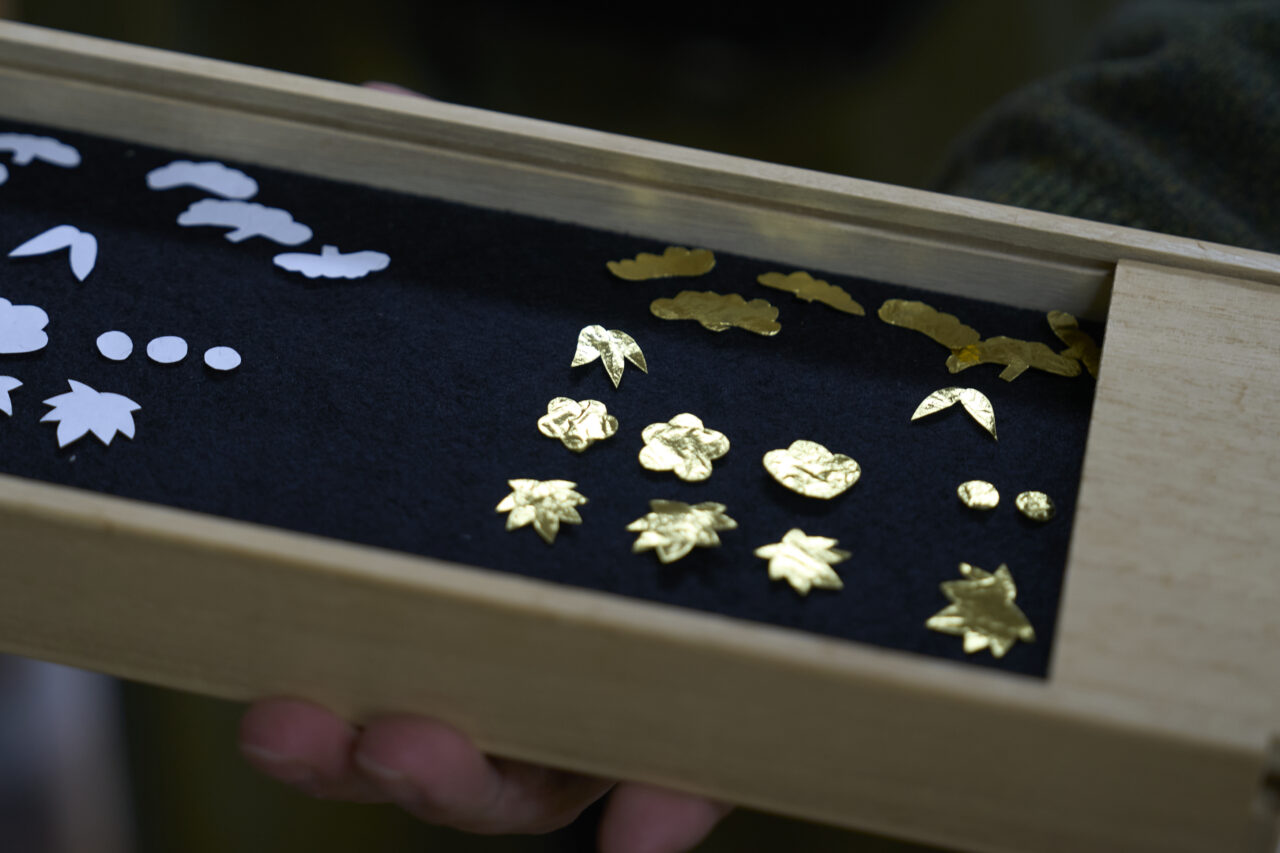
Mutan is a stone-built gallery established by the Kutani porcelain kiln Kinzangama. The name Mutan carries the meaning of “a beginning without sound, and creation in a state of selflessness,” a phrase that encapsulates the philosophy and spirit of the kiln. Founded in 1906, Kinzangama Kiln is known for its mastery of gold decoration techniques. The third-generation head, Minori Yoshita, was designated a Living National Treasure for his work in yuri-kinsai, in which delicate gold leaf is sealed in a transparent glaze. While honoring the pride of craftsmanship, the kiln continues to strive toward new heights. That quiet determination is reflected in the gallery’s poised and dignified presence. Inside, works from successive generations of the kiln are displayed and available for purchase. The fourth-generation head, Yukio Yoshita, notes that “works using gold leaf are most beautiful in natural light,” and indeed, the pieces revealed within the softly illuminated space are striking. Although events and workshops are held irregularly, the gallery also welcomes inquiries from visitors abroad.
Address: To-18 Takando-machi, Komatsu-city, Ishikawa Prefecture, Japan
Instagram: https://www.instagram.com/mutan_gallery/
Website:
https://mutangallery.com/
https://kinzangama.com/
A gallery filled with natural light
Walls built from Kanagaso stone, traditionally used for storehouses and stone walls
Kinrande works by fourth-generation head Yukio Yoshita
Works by successive generations of the kiln on display
“Kachou Mutan,”an art piece by Kinzangama
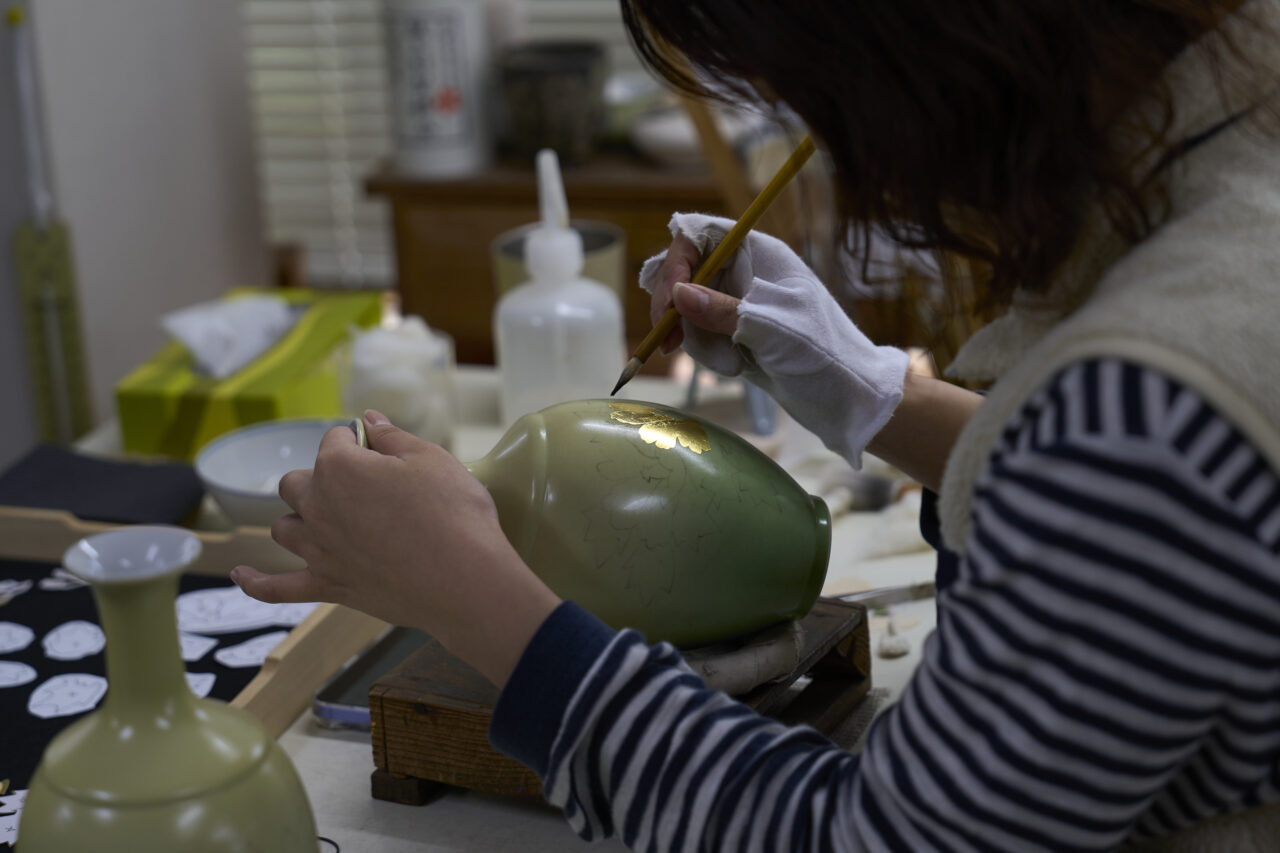
Pottery making in the studio
Gold leaf prepared for use in workshops
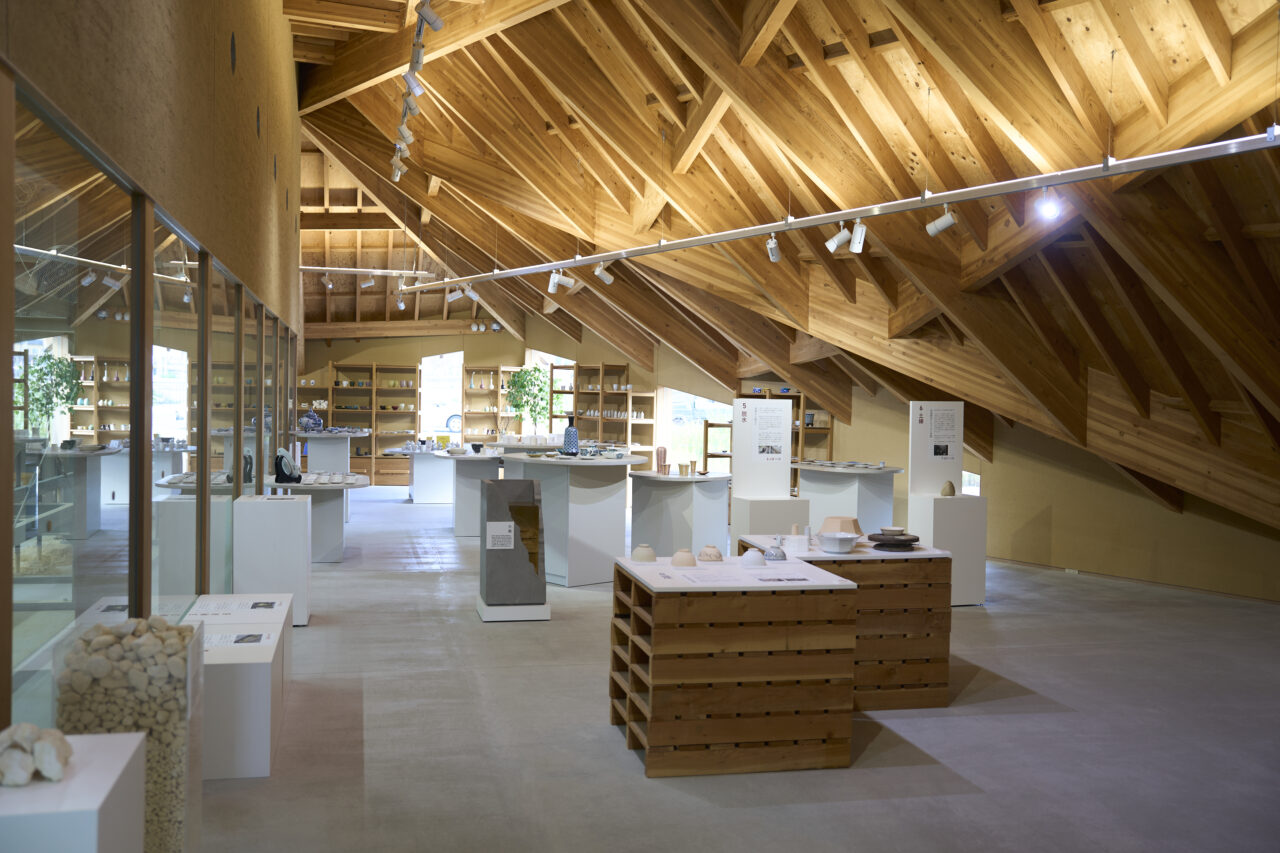
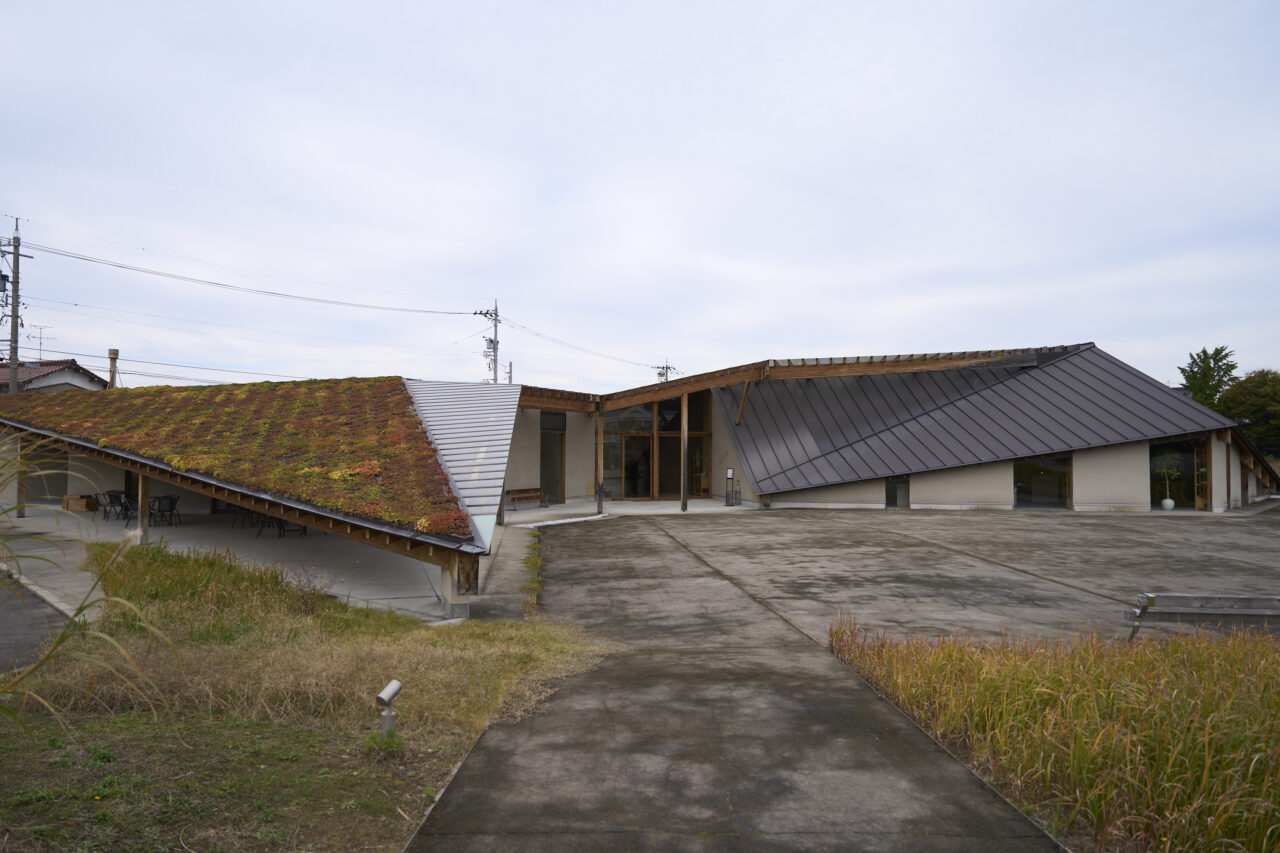
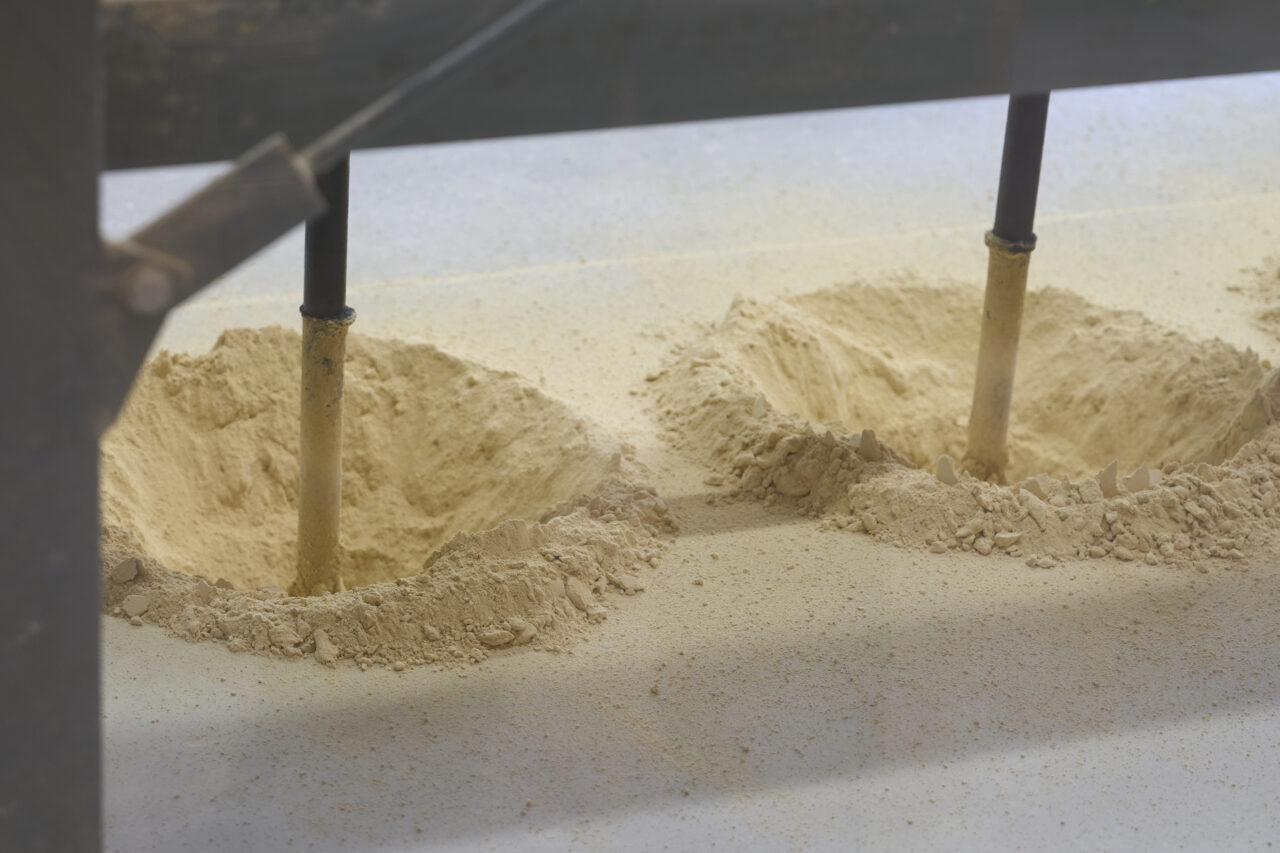
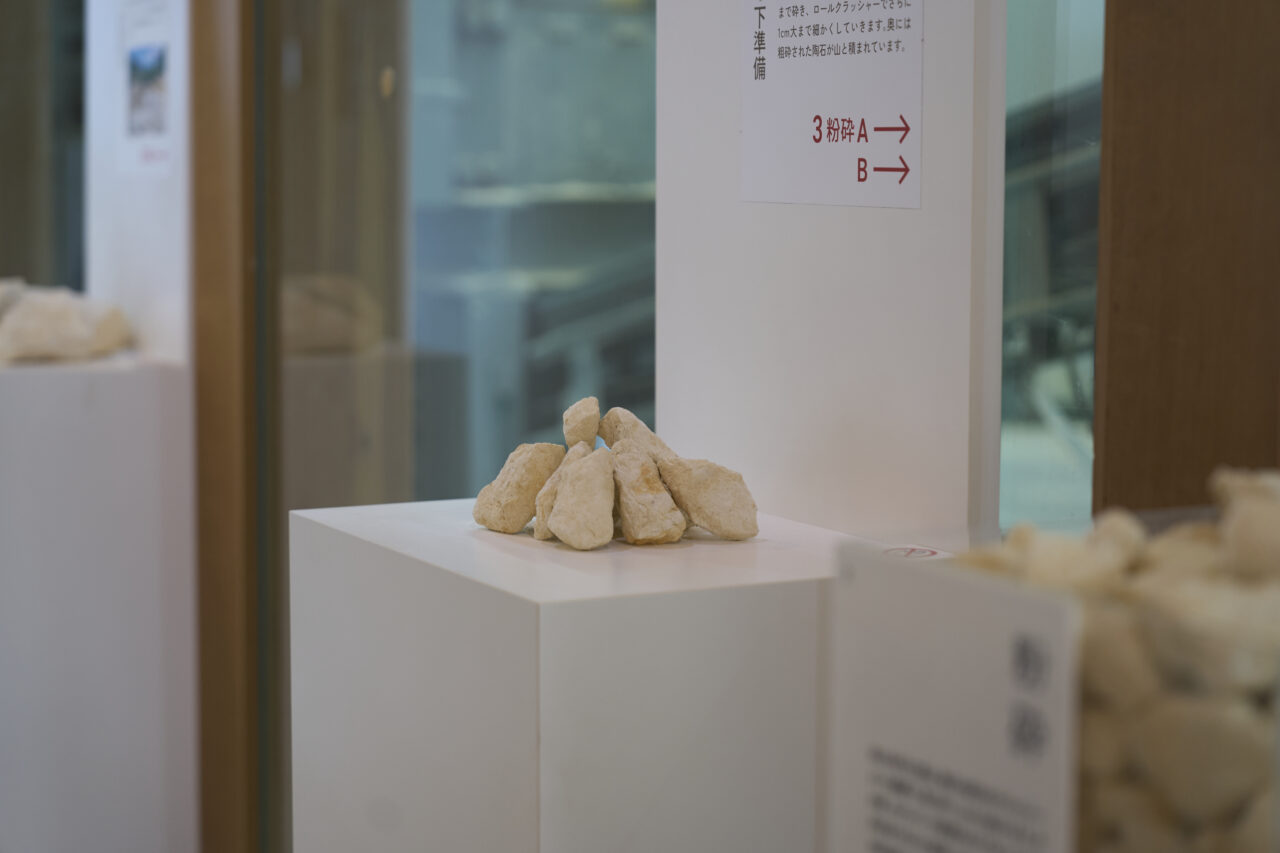
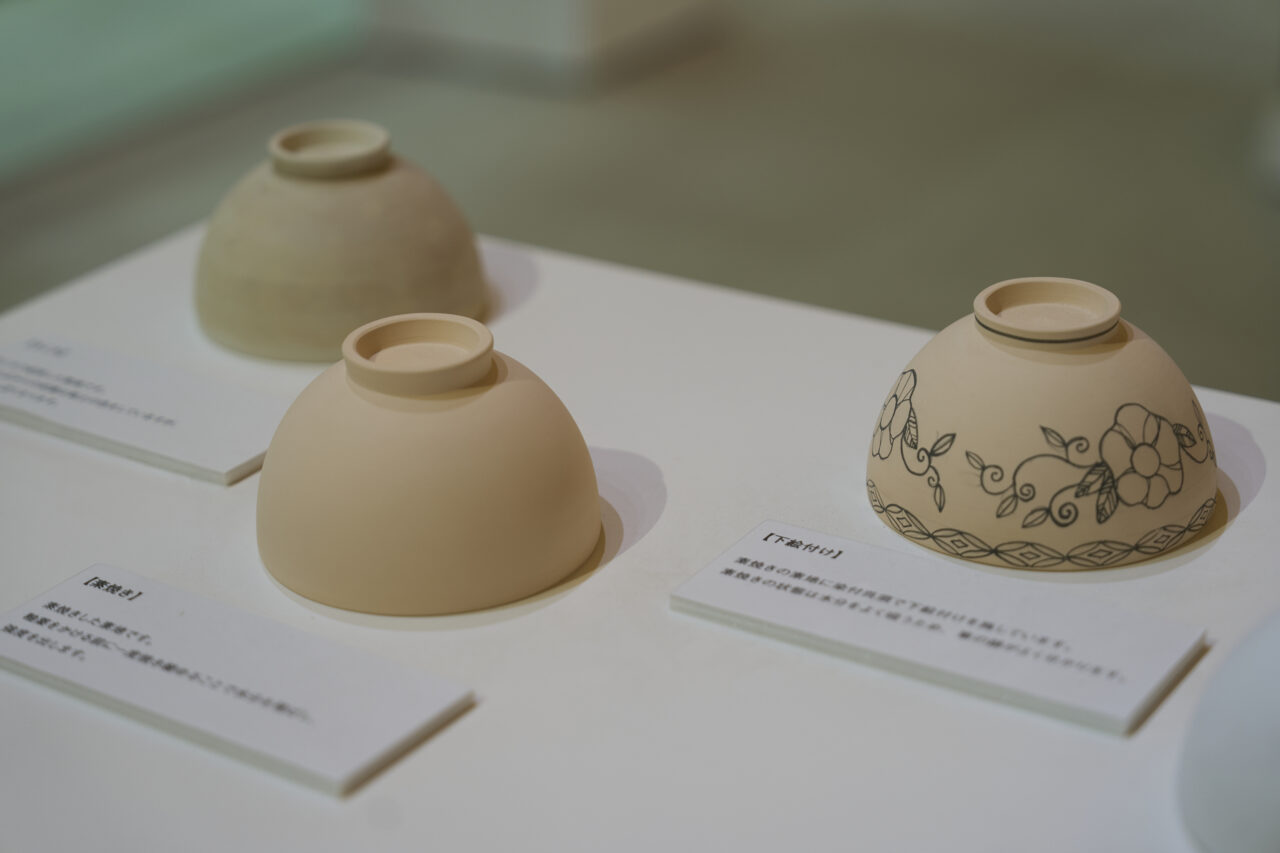
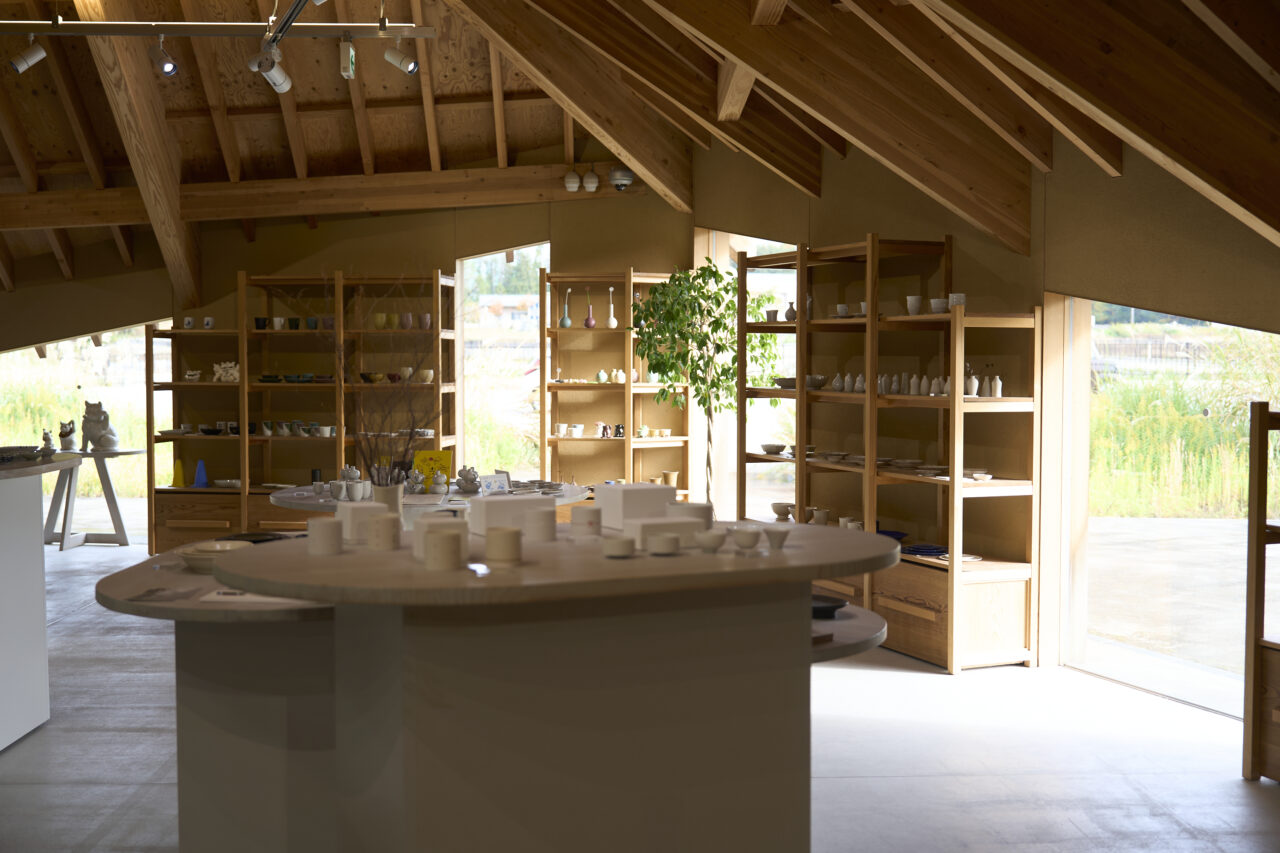
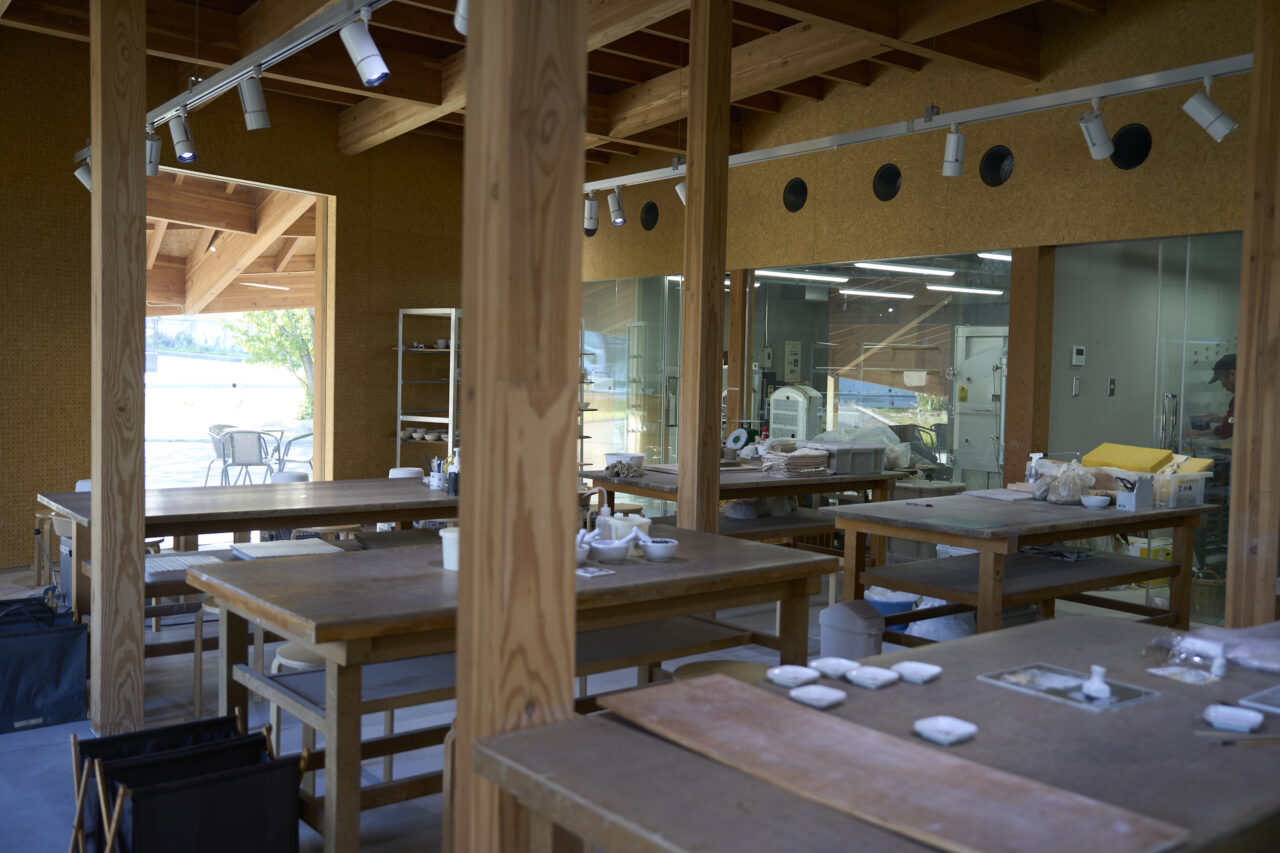
Located in Komatsu, Kutani Ceramic Laboratory, commonly known as CERABO KUTANI, is a comprehensive facility dedicated to Kutani ware. Designed by architect Kengo Kuma, the single-story wooden structure opened in 2019, and brings together a clay-processing plant, hands-on workshop spaces, studios for working artists, and a shop under one roof. Its refined use of timber and understated form have made it a new landmark for the city, and earned recognitions such as the Ishikawa Landscape Award. Within the building is a clay-processing plant for Hanasaka porcelain stone, the local porcelain material essential to Kutani ware. Alongside exhibitions introducing the manufacturing process, the facility presents the world of Kutani ware from multiple perspectives, offering insight into both material and craft. In the adjacent studios, practicing ceramic artists make use of the space. During wheel-throwing or painting workshops, visitors may receive guidance directly from them. The facility is managed and operated by the Kutani Kiln Association, and the on-site shop offers works by member kilns and artists. As the exhibitions can be viewed in about thirty minutes, it is well worth a visit when in the area.
Address: A-91 Wakasugi-machi, Komatsu-city, Ishikawa Prefecture 923-0832, Japan
Instagram: https://www.instagram.com/kutani_ceramic_lab/
Website: https://cerabo-kutani.com
An interior defined by a beautifully crafted wooden ceiling
Designed by architect Kengo Kuma
The clay-processing stage of Hanasaka porcelain stone
Hanasaka porcelain stone
An introduction to the underglaze painting process
The on-site shop offers works by a variety of artisans
A space for wheel-throwing and painting workshops
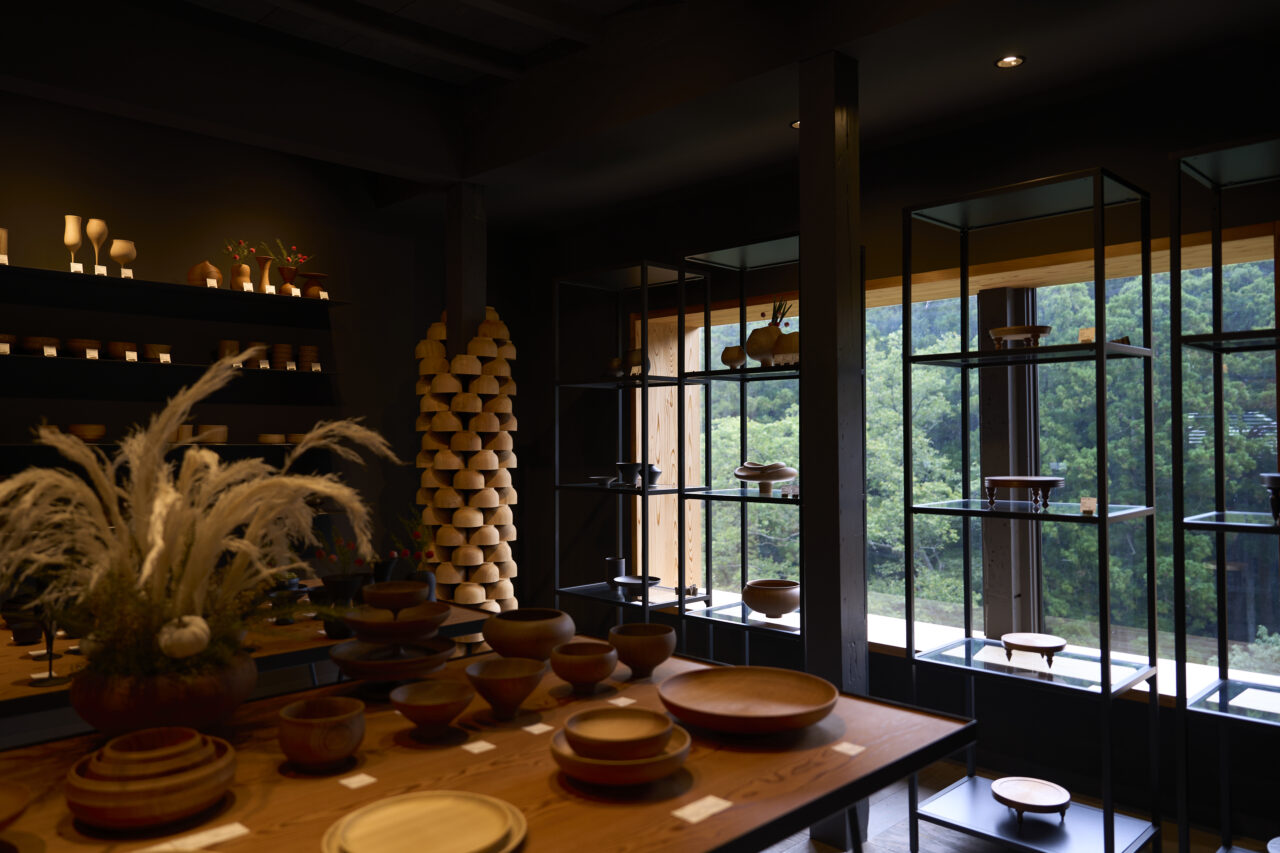
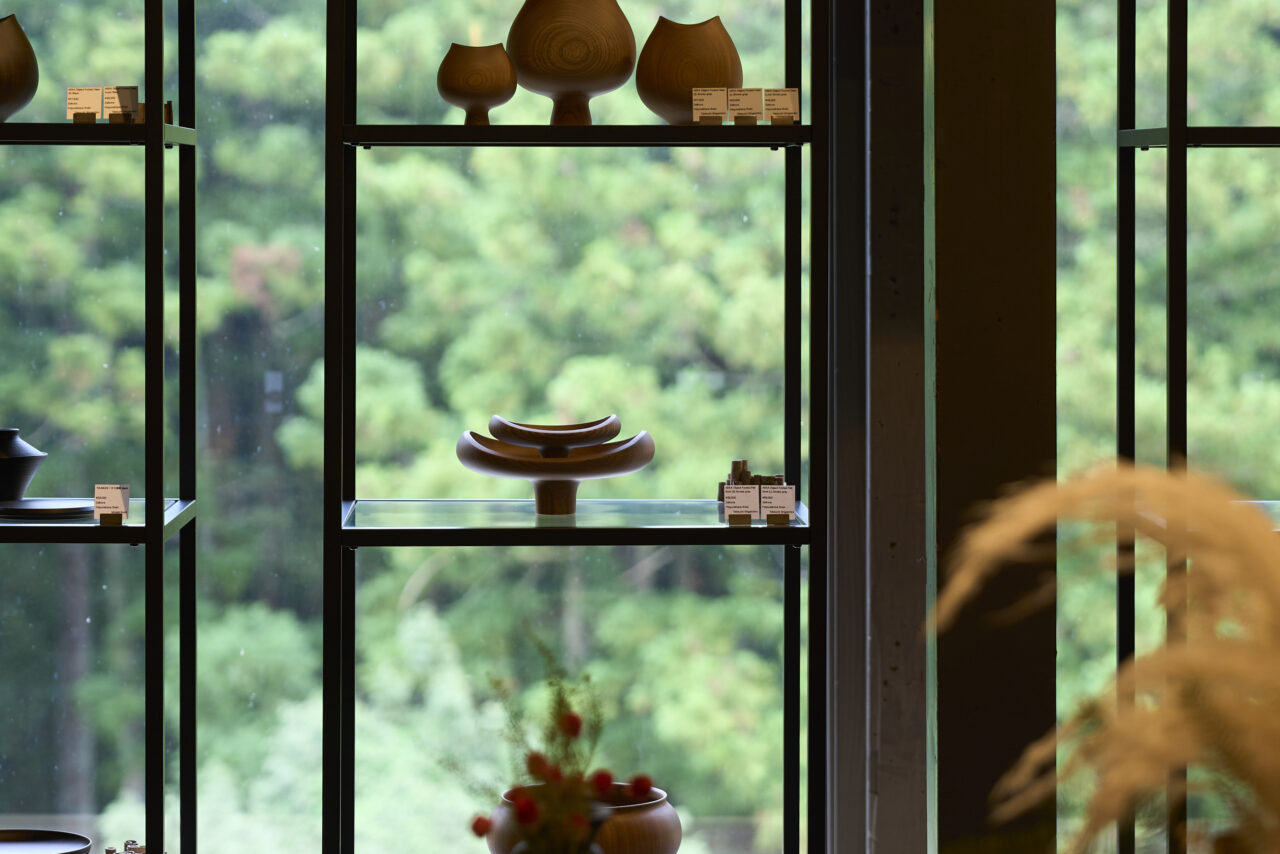
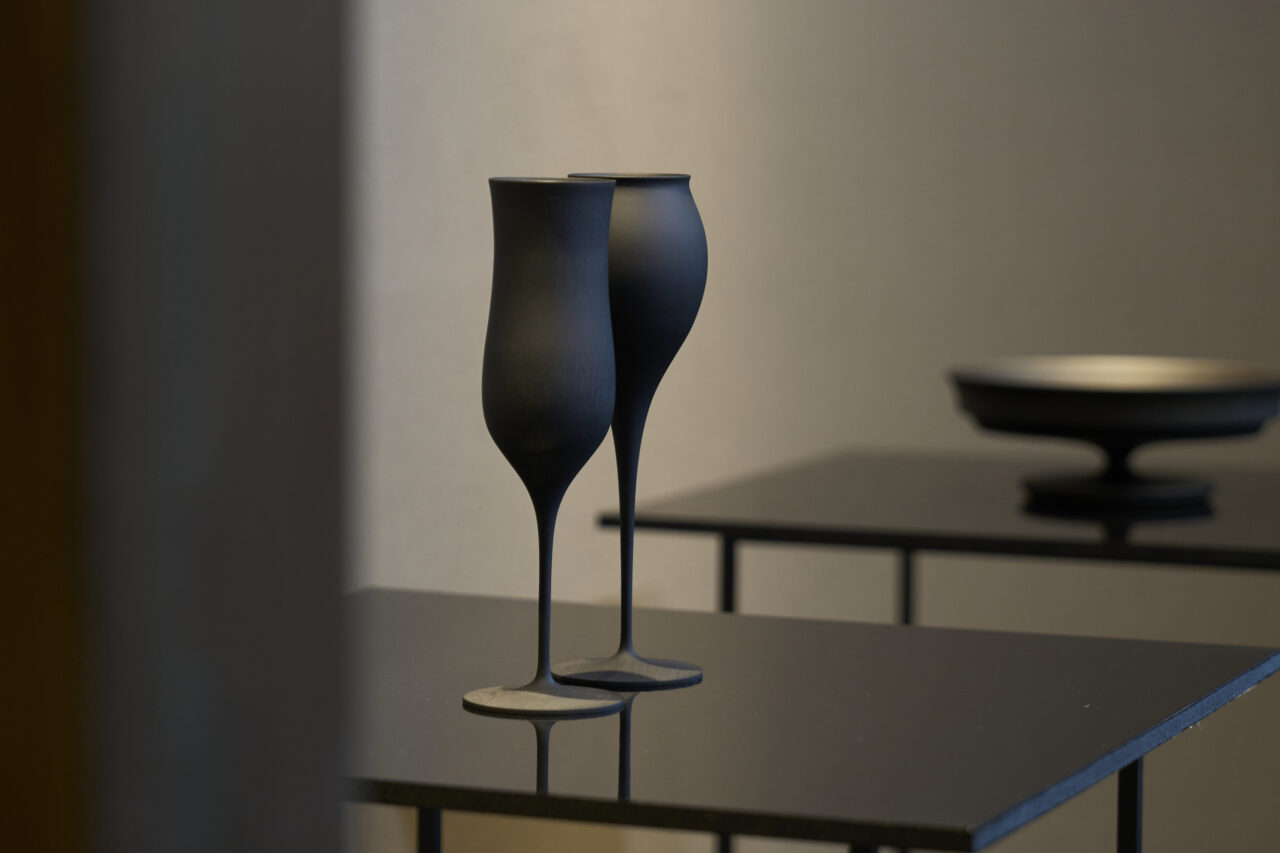
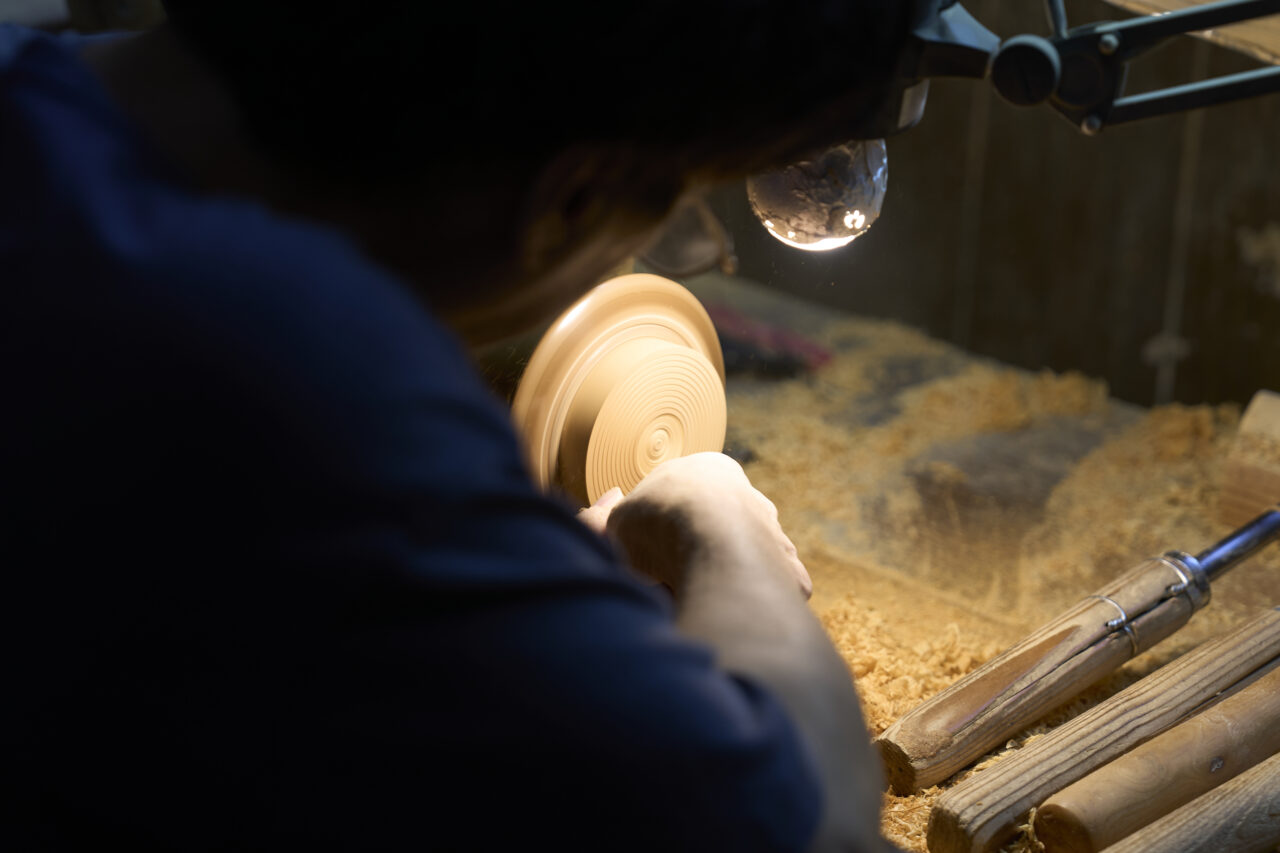
“Yamanaka for woodturning.” Known for its mastery of woodturning, the Yamanaka district in Kaga, Ishikawa Prefecture, has long been the heart of Yamanaka lacquerware, where generations of woodturners cultivated their craft and aesthetic sensibilities. In 2017, GATO MIKIO/1, the flagship store of the Yamanaka lacquerware brand Gato Mikio, opened in this historic setting. The “/1” in its name expresses the intention to look back on history and return to the origin, beginning anew from Yamanaka Onsen. It stands as a symbol of the brand’s philosophy. Within the dimly lit interior, the aesthetic vision of its head, Masayuki Gato, is present in every detail. The contours and textures of lacquerware emerge quietly from the shadows. The space calls to mind the sensibility described in Junichiro Tanizaki’s classic book In Praise of Shadows, allowing visitors to experience the depth and subtle beauty inherent in lacquer as a material. On display is the brand’s full line of works, including bowls, tea caddies, cups, and trays. Each piece is grounded in the traditional woodturning techniques passed down in Yamanaka, yet refined into forms that resonate with contemporary life. Located near Kakusenkei Gorge, one of Yamanaka’s most scenic spots, the store is surrounded by trees. Taking time to touch and contemplate the works in this quiet setting naturally clears the mind. As a place to reflect on the origins of craft, GATO MIKIO/1 quietly presents the present state of Yamanaka lacquerware.
Address: Ni-3-7 Korogi-machi,Yamanaka Onsen, Kaga-city, Ishikawa Prefecture 922-0128, Japan
Instagram: https://www.instagram.com/gatomikio_shouten/
Website: https://www.gatomikio-1.com/
An interior curated with finely crafted pieces
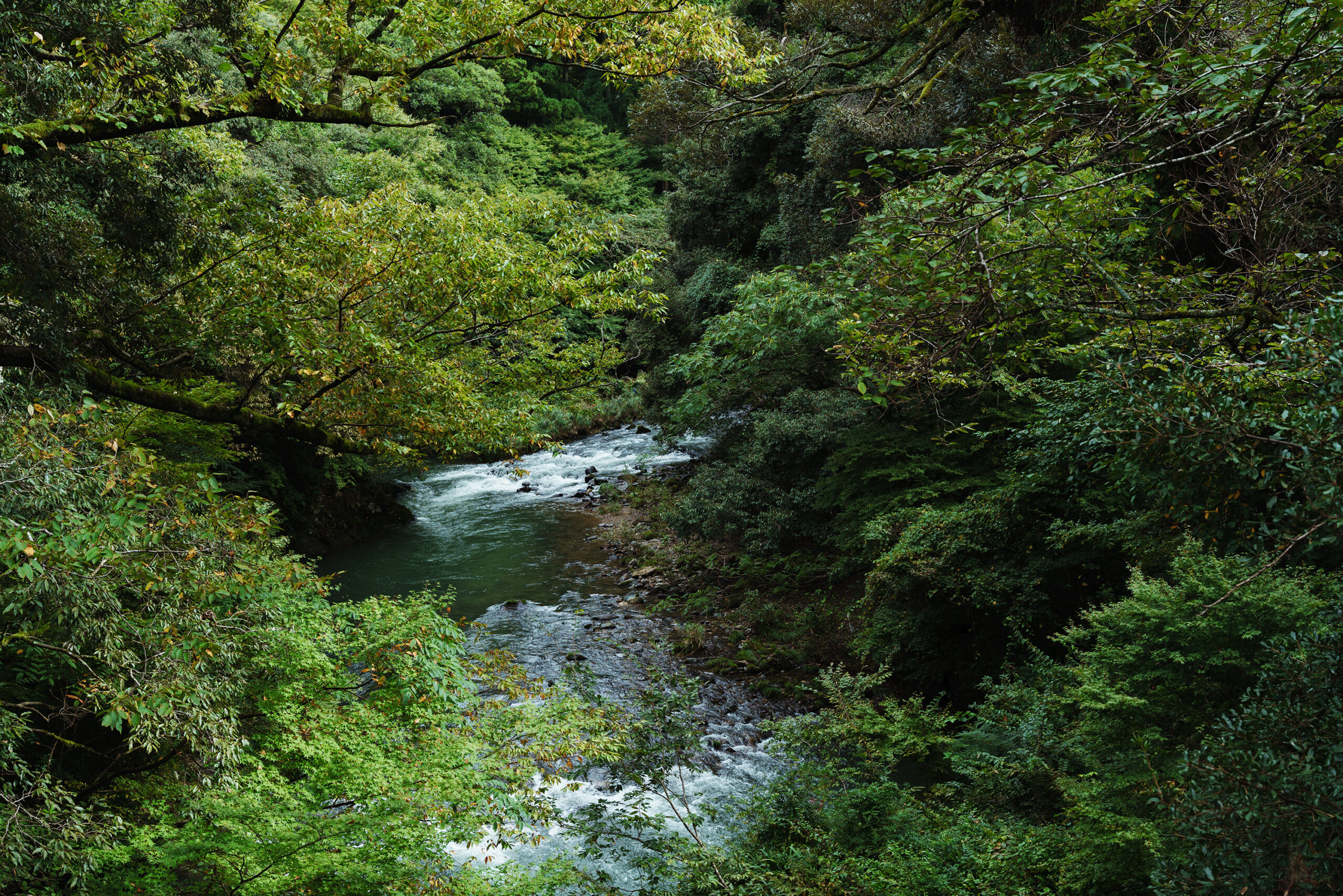
Lush greenery unfolds beyond the windows
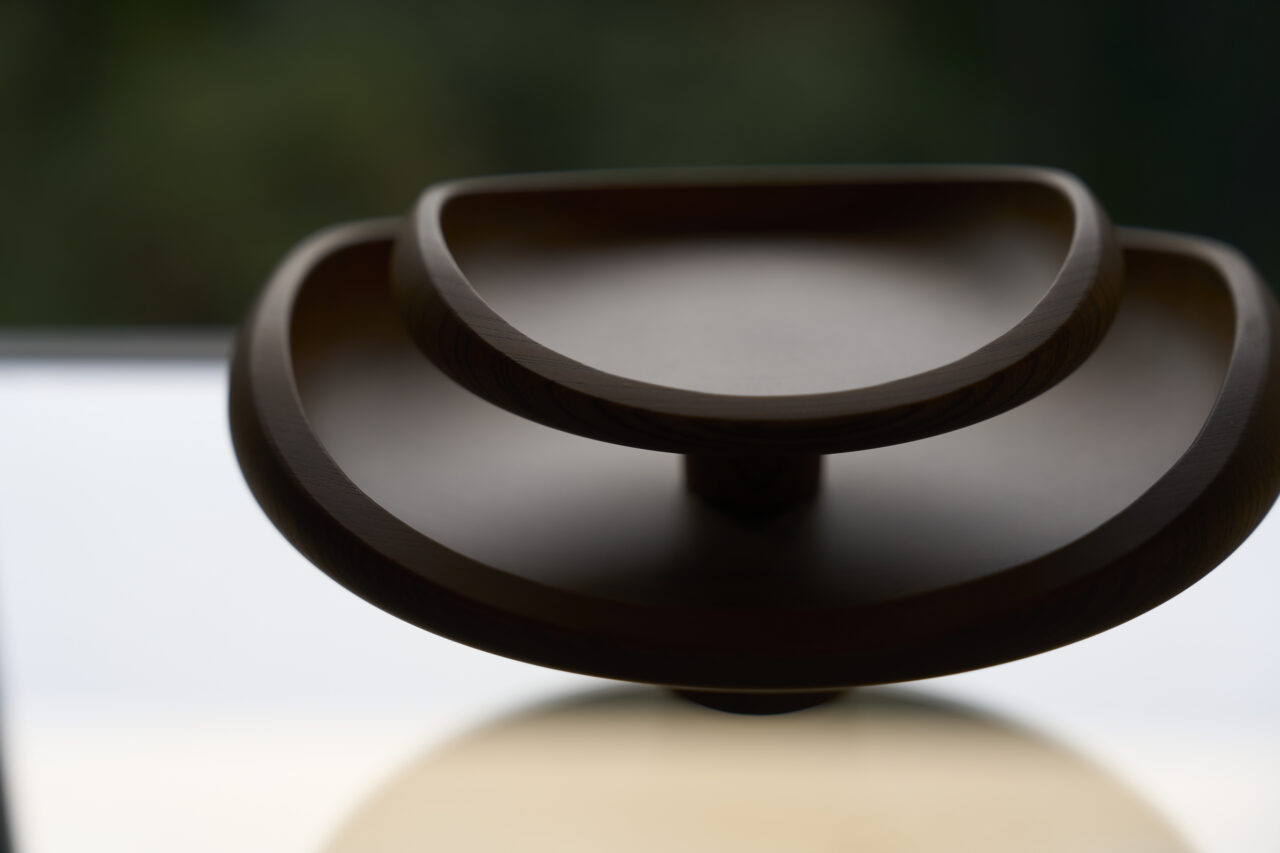
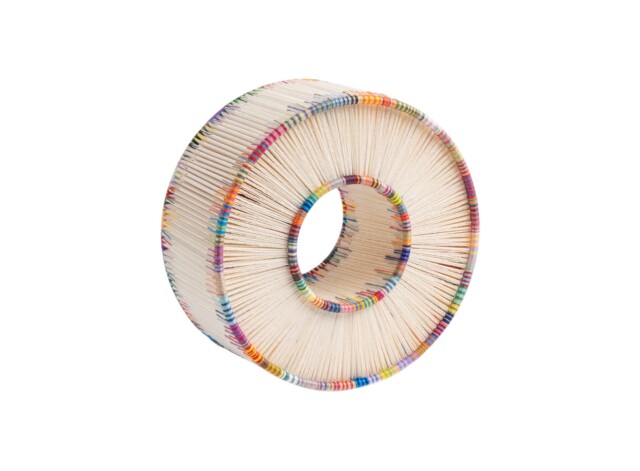
Sculptural pieces from the AEKA series
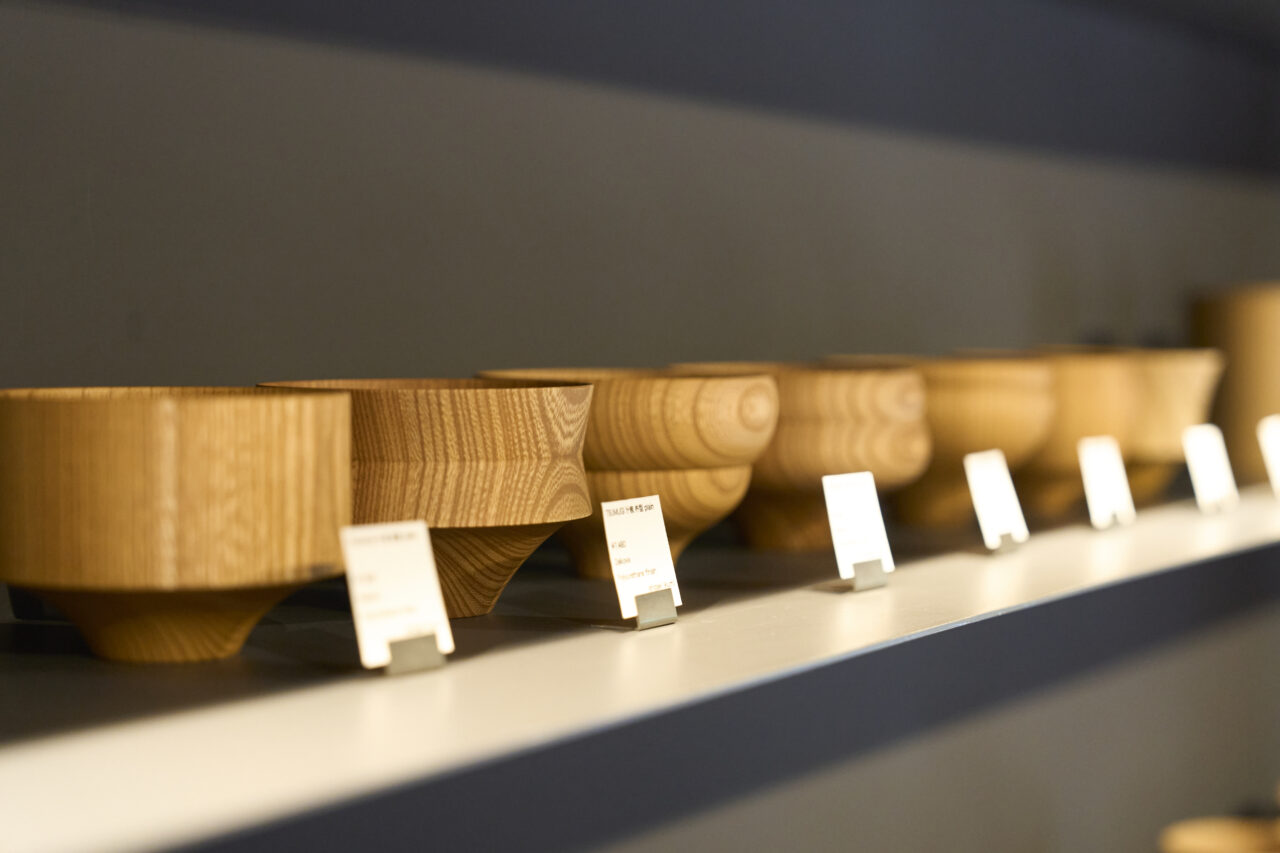
Bowls from the TSUMUGI series, each revealing a unique grain of wood
Champagne glasses from the TOHKA series
Woodturning by skilled craftsmen
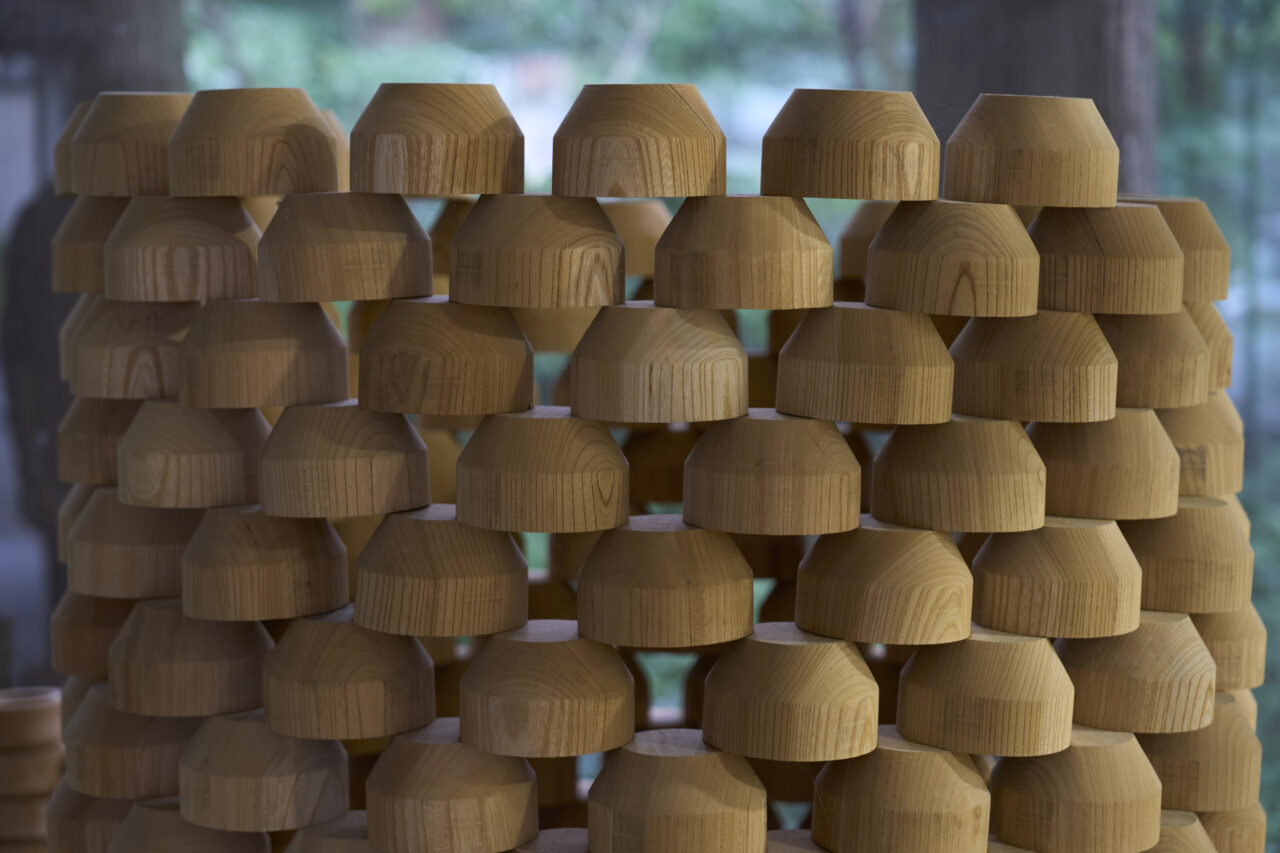
A display of wooden base materials
Access to Komatsu
From Tokyo
– Approximately 3 hours by shinkansen bullet train from Tokyo Station to Komatsu Station
– Approximately 1 hour by air from Haneda Airport to Komatsu Airport
From Osaka
– Approximately 2 hours 15 minutes by limited express and shinkansen bullet train from Osaka Station to Komatsu Station
From Kanazawa
– Approximately 12 minutes by shinkansen bullet train from Kanazawa Station to Komatsu Station, or 30 minutes by local train
– Approximately 40 minutes by car from Kanazawa Nishi IC to Komatsu IC
Access to Kaga
From Tokyo
– Approximately 3 hours by shinkansen bullet train from Tokyo Station to Kaga Onsen Station
– Approximately 1 hour by air from Haneda Airport to Komatsu Airport, then about 20 minutes by car to Kaga Onsen Station
From Osaka
– Approximately 2 hours 10 minutes by limited express and shinkansen bullet train from Osaka Station to Kaga Onsen Station
From Kanazawa
– Approximately 18 minutes by shinkansen bullet train from Kanazawa Station to Kaga Onsen Station, or 45 minutes by local train
– Approximately 50 minutes by car from Kanazawa Nishi IC to Kaga IC