
“Nosou™,” A New Brand Rooted in Natural Materials and Craftsmanship, Unveils Bamboo Lighting Collection
New Products VOL.30
VOL.1-30
Update
VOL.1-65
Update
VOL.1-5
Update
VOL.1-32
Update
VOL.1-8
Update
VOL.1
Update
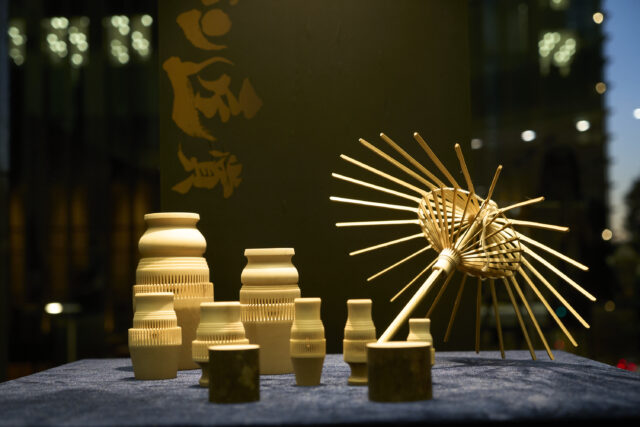
VOL.1-27
Update
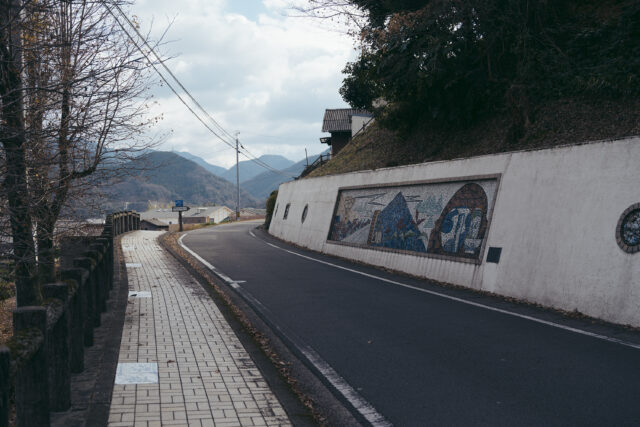
VOL.1-4
Update
VOL.1-3
Update
We share a variety of information and perspectives on Japanese crafts, including exhibition information and interviews.
New Products VOL.30
New Products VOL.29
Featured Exhibitions & Events VOL.65
Editor's Column “The Path of Japanese Crafts” Part2: Modern Society and Kogei VOL.5
Jul 31 – Aug 18, 2026
Sophora
Aug 13 – Aug 25, 2026
Kyoto yamahon
Aug 14 – Aug 29, 2026
HULS GALLERY TOKYO
Aug 15 – Oct 12, 2026
Nezu Museum
In 2024, Shinbe Sakakura succeeded to the title of the 16th head of the Sakakura Shinbe-gama Kiln. As the current master of the Kiln, a long-established producer of Fukawa-Hagi ware, he held a series of successful exhibitions across Japan in 2025 commemorating the succession. How does he view his own practice as a ceramic artist now? And how does he envision the future of Fukawa-Hagi as a way of craft? In this interview, Shinbe reflects on the new perspectives that emerged through the succession, and speaks about what lies ahead for Hagi ware, rooted in its place of origin and local climate.
Interview by Kyoko Tsutsumi
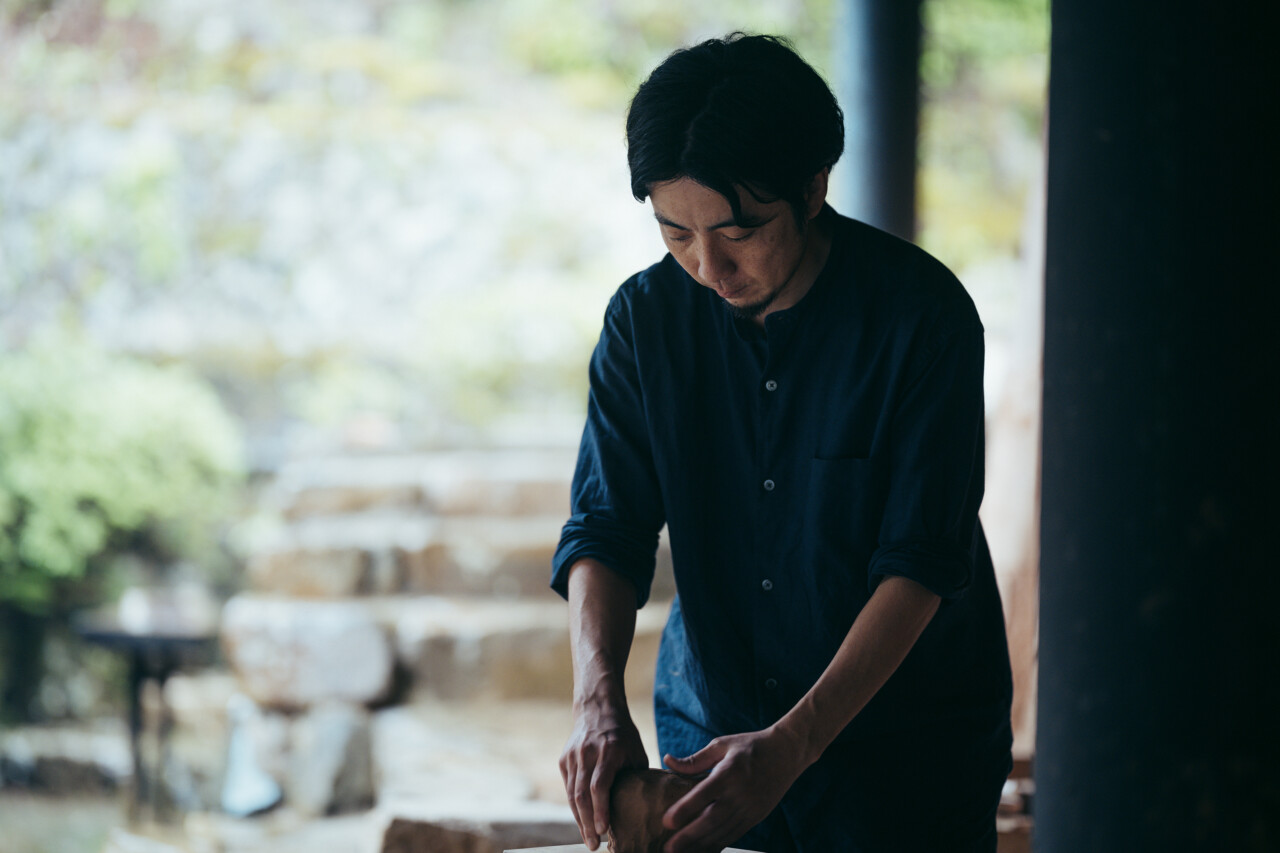
Living and working in Nagato, Yamaguchi Prefecture, Shinbe Sakakura is the 16th-generation head of the Sakakura Shinbe-gama Kiln, a Fukawa-Hagi kiln with nearly 360 years of history. In addition to using traditional Hagi clay such as Daido-tsuchi, he also uses clay that he collects himself close to home to create his work. He makes use of the texture of the materials to create a wide range of works, including ceramics for use in tea ceremonies and various objets d’art.
* Masahiro Sakakura succeeded the title of Shinbe Sakakura XVI on May 27, 2024.
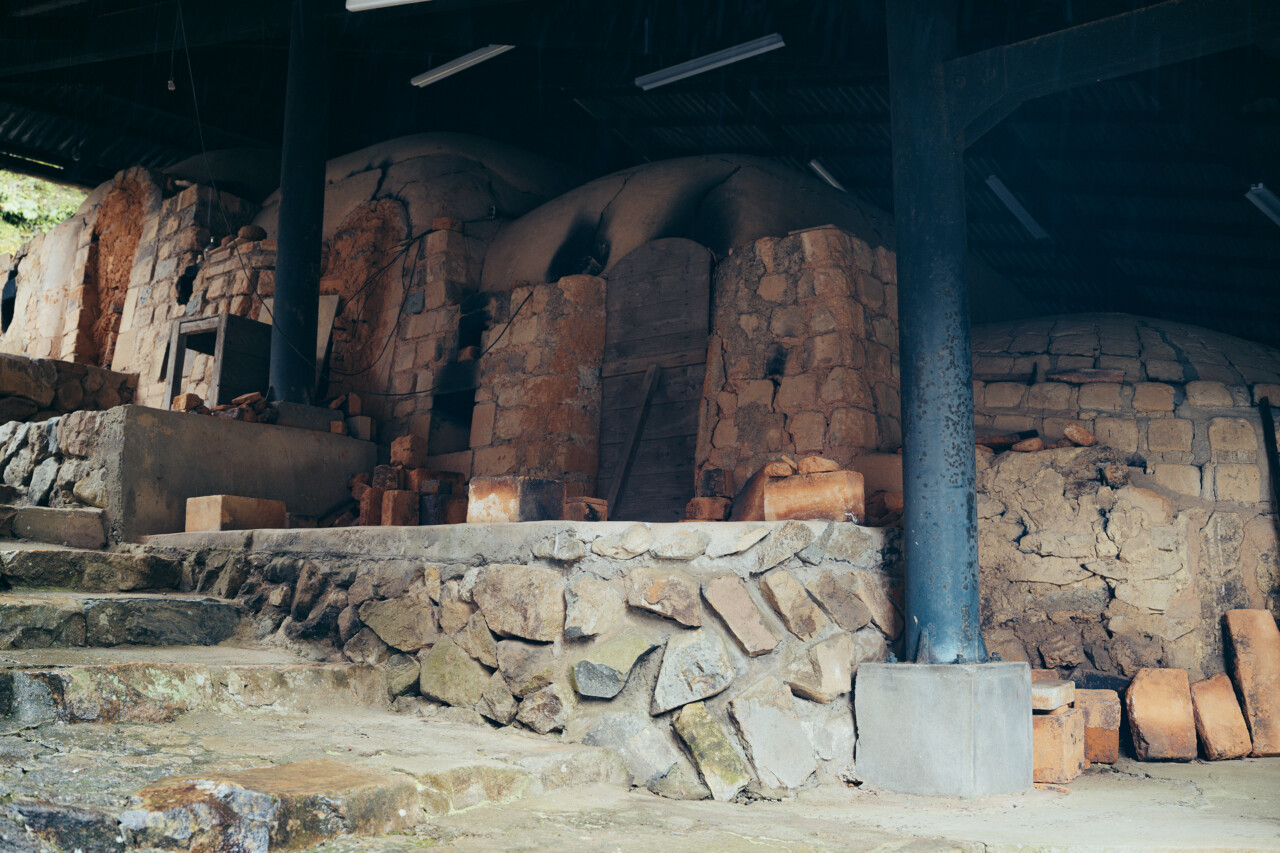
PROFILEThe nobori-gama climbing kiln of the Sakakura Shinbe-gama Kiln
The succession became an opportunity for me to look closely and honestly at the level of my work as an artist, perhaps even at what might be called its stature. In inheriting the name, I continually asked myself whether I was truly able to create work worthy of it. That question has remained with me ever since.
Tea ceramics exist within a unique world. Tea utensils are created for clearly defined occasions, and each piece inherently plays its own role within that setting. In a kiln with generations of history, the name of the kiln inevitably accompanies the work. That was something I could not help but remain conscious of. The succession commemorative exhibitions marked the first occasion on which the works I had created under these circumstances were evaluated publicly. I felt far more nervous than I had anticipated, and the pressure was considerable. At the same time, having people view the pieces and sensing that they were received with a certain level of appreciation has brought me a measure of relief.
Before the succession, I had held many exhibitions, and I often felt as though I was creating work in a more immediate, almost instinctive way. Rather than carefully developing each piece over time, many of the works captured a cross-section of who I was at that particular moment, including spontaneous ideas as they arose. However, after the succession, as I began preparing for exhibitions over longer periods of six months to a year, I found myself spending much more time confronting my own practice. In doing so, I became acutely aware of how deeply my state of mind and personal reflections influence the work. In some ways, it reminded me of when I had just begun my career as an artist, a time when I struggled and searched while making each piece.
Until now, I have consciously tried to broaden my range, keeping my antennae tuned outward and engaging in a wide variety of approaches and experiments. At this stage, however, I feel a need to pause and elevate each element of my practice, including technique, materials, and the overall quality of execution, one by one. It is not that I intend to stop pursuing new challenges. Rather than bringing in something new from the outside, I sense a shift toward refining what already exists within me. The timing of the succession may well have influenced this. Perhaps, in terms of age as well, I have reached a stage in my life as an artist where such a process is necessary. I feel that unless I move through this phase with care and integrity, I will not be able to advance to what comes next.
At the same time, it’s not as though there are no new stimuli in my life. Surprisingly, the world of tea and the traditions that the kiln has carried on for generations have entered my life as something new on a personal level. I’ve come to realize that what I had previously only seen on the surface holds far more depth than I had imagined. Whether that depth comes from within me or is something gained from outside is still somewhat unclear. But I believe there are still countless things I have yet to achieve and many aspects I have not fully grasped.
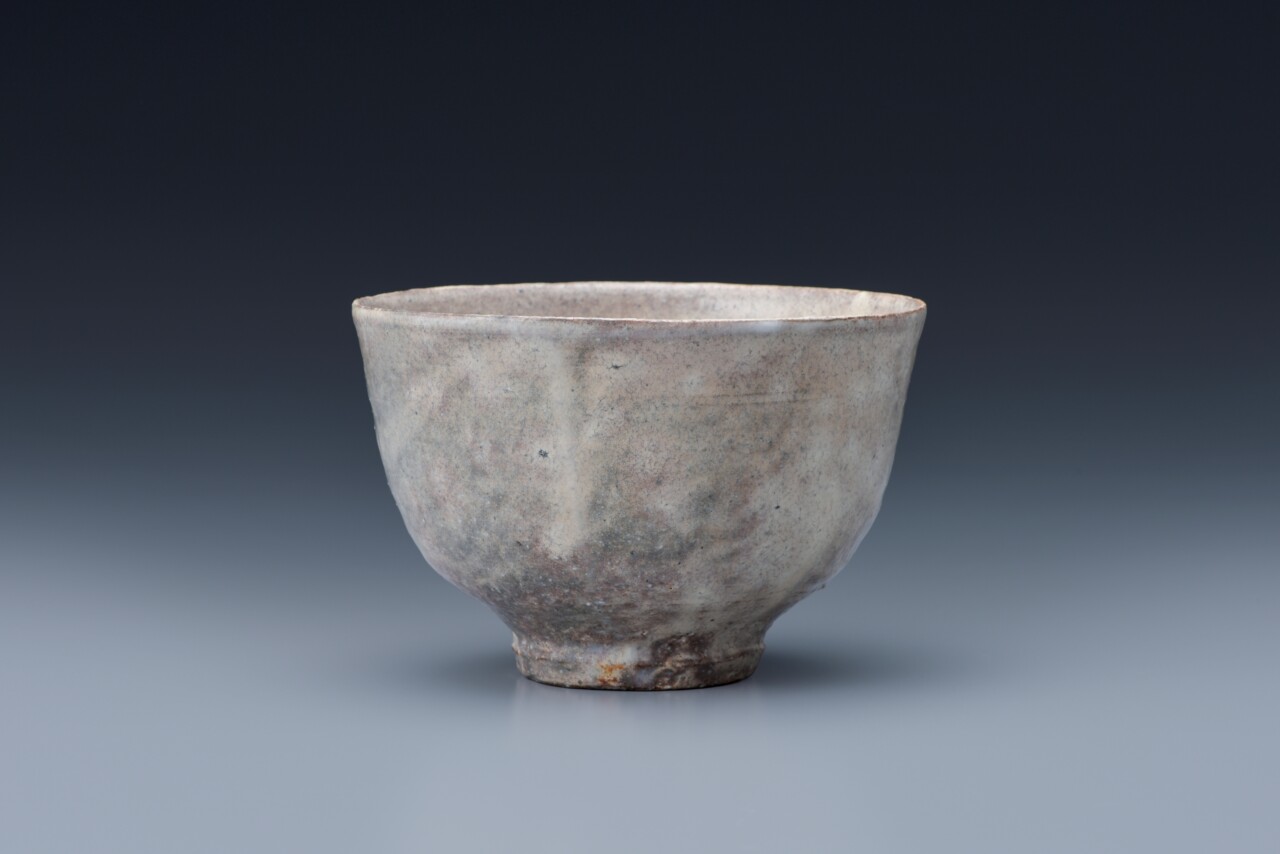
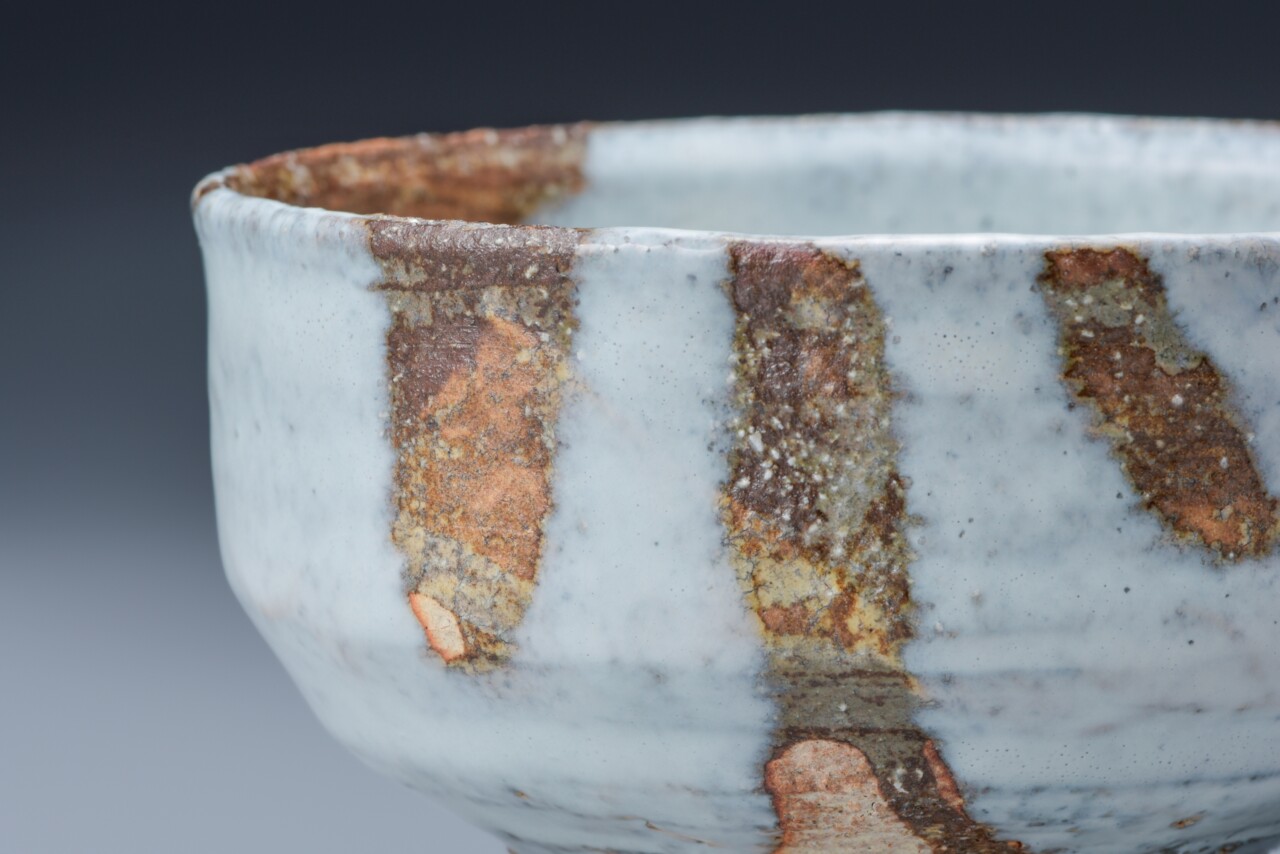
Title: “Hagi Tea Bowl” (Year: 2025)
Yes, that will not change. However, tea ceramics are extremely challenging. When viewed as craft, there are many perspectives to consider, such as form, design, and spatial presence. Yet in the context of tea, additional elements enter the picture, elements that are grounded in actual use. The more deeply one engages with this world or tea ceremony, the more significant those elements become. Serious tea practitioners evaluate works only after having practiced tea themselves, viewing them not only as objects of craft but also in relation to their role within the tea ceremony. The level of discernment is truly high. In some cases, even historic masterpieces become one’s rivals. Of course, it is difficult for a work to be used on the same level as those revered pieces. To create something that can stand beside them and still be found compelling is an exceptionally high hurdle. When one inherits the name of a kiln, that world begins to come into view. It is not a matter of becoming conservative. Rather, it feels as though mountains that were previously unseen suddenly enter one’s field of vision all at once. Through the succession, the world before me has undeniably expanded.
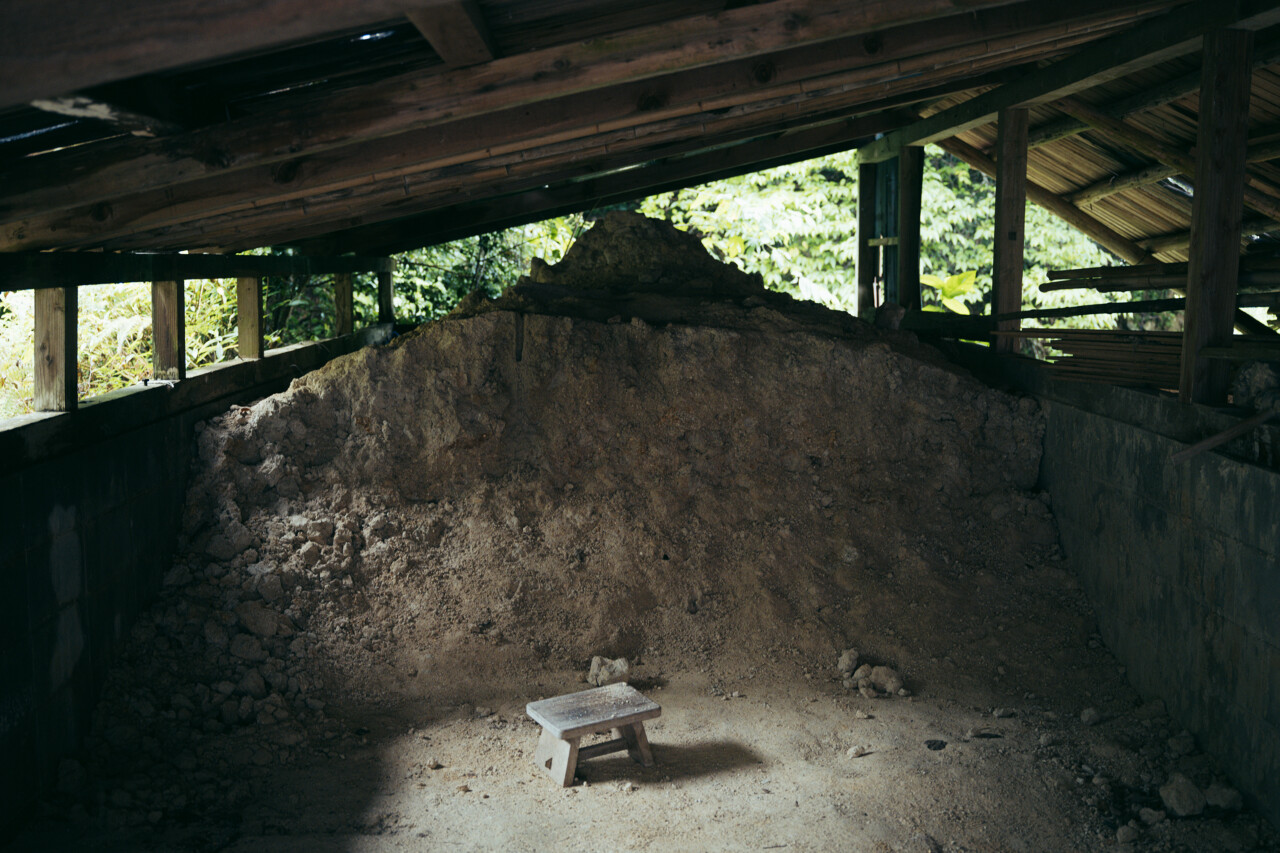
The Daido-tsuchi clay traditionally used in Hagi ware production
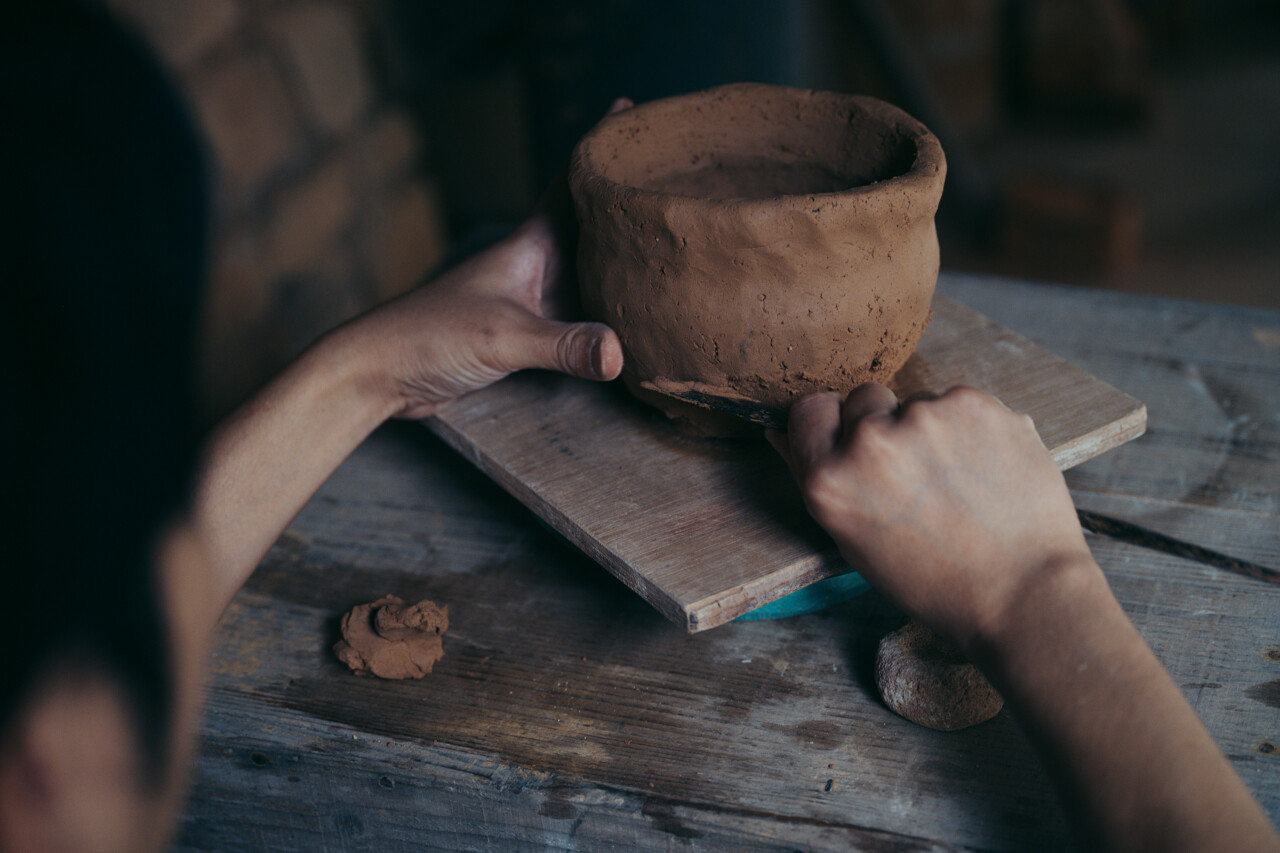
Engaging with the clay while envisioning the moment of use
Hagi ware was something that had always been part of my life, something I took for granted. However, the way I see our kiln and Hagi ware today is slightly different from how I saw them when I first began working. When I was younger, I was more aware of what seemed like problems within the ceramics world and within Hagi ware itself. I wondered whether it was enough to continue as things had always been done, and whether it might be possible to create something more compelling. Perhaps that is something many young people feel in any field. Yet as I continued, I began to see that each of those aspects has its own reasons and history. I do not deny the feelings and instincts I had when I was young. At the same time, as one grows older and gains experience, other perspectives begin to emerge. One starts to think that perhaps there is value in things being as they are. I suppose that may be what it means to accumulate experience over time.
With that said, it is not exactly the same as the issues I first sensed, but for example, Hagi has been an extremely successful production area, especially centered on tea ceramics. Still, I do feel that the way Hagi ware has been positioned and supported may, in coming years, no longer resonate in quite the same way in certain respects. In that context, rather than thinking in terms of Hagi ware as a whole, I have been thinking from the very beginning about how I myself should move forward and what I can do. There are areas where I can already feel a response and a sense of progress, but it is probably still not enough. I continue to think, more deeply and carefully, about what kind of approach to making work and what kind of way of presenting it will lead into the future.
Working beside the climbing kiln. Clay drawn from the mountain behind it becomes part of the work
In addition to that, there is something I have been thinking about in recent years. In Japan, there are countless ceramic production areas, each with its own distinct craft tradition that has developed over time and continues to survive as an industry today. In that sense, I believe Japan is unquestionably one of the most fascinating countries in the world when it comes to craft. Within that landscape, as the head of a kiln in Hagi, a single ceramic production area, I feel it is extremely important to remain truly Hagi ware. We live in an age when it seems possible to create anything, anywhere. Yet rather than pursuing that kind of boundlessness, I believe it is more important to make the effort to remain grounded in the core of Hagi ware. On that foundation, I want to create works that people find compelling. By valuing the identity of Hagi ware, I believe it ultimately contributes to the richness of Japanese craft as a whole and to the cultural richness of Japan itself.
For me, the key word is fudo, the area’s unique combination of climate and land. This does not simply mean temperature, light, soil, food, or even the disposition of the people who live here. It is something more elusive and fundamental. I want to express the particular character of Fukawa-Hagi in my ceramics. However, I am not trying to pursue a conventional idea of what Hagi ware should look like, nor am I chasing an established image of it. Rather, at a deeper level, I want to create work that is rooted in the soil and environment of this place. I believe that the subjective elements of the land itself, what one thinks and feels in response to it, should be expressed in ceramics. It is difficult to put into words, but I feel there are things that can only be created here in Fukawa. When a work takes root in the identity that flows through a particular place and passes through the maker’s own unique filter, and when those elements feel visibly connected, the result is truly beautiful. I would like to continue making work with the feeling that what I create absorbs the elements of this land and, from that nourishment, blossoms into something new.
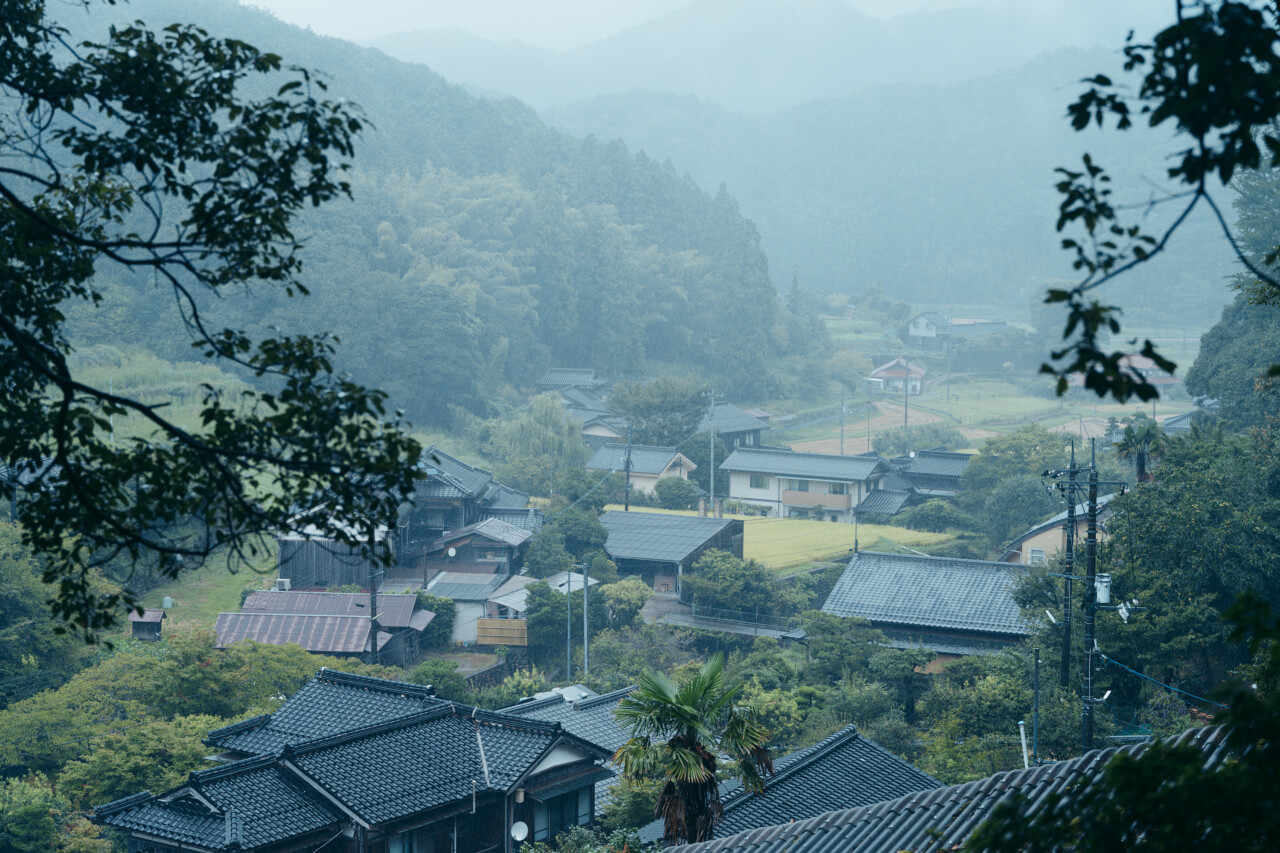
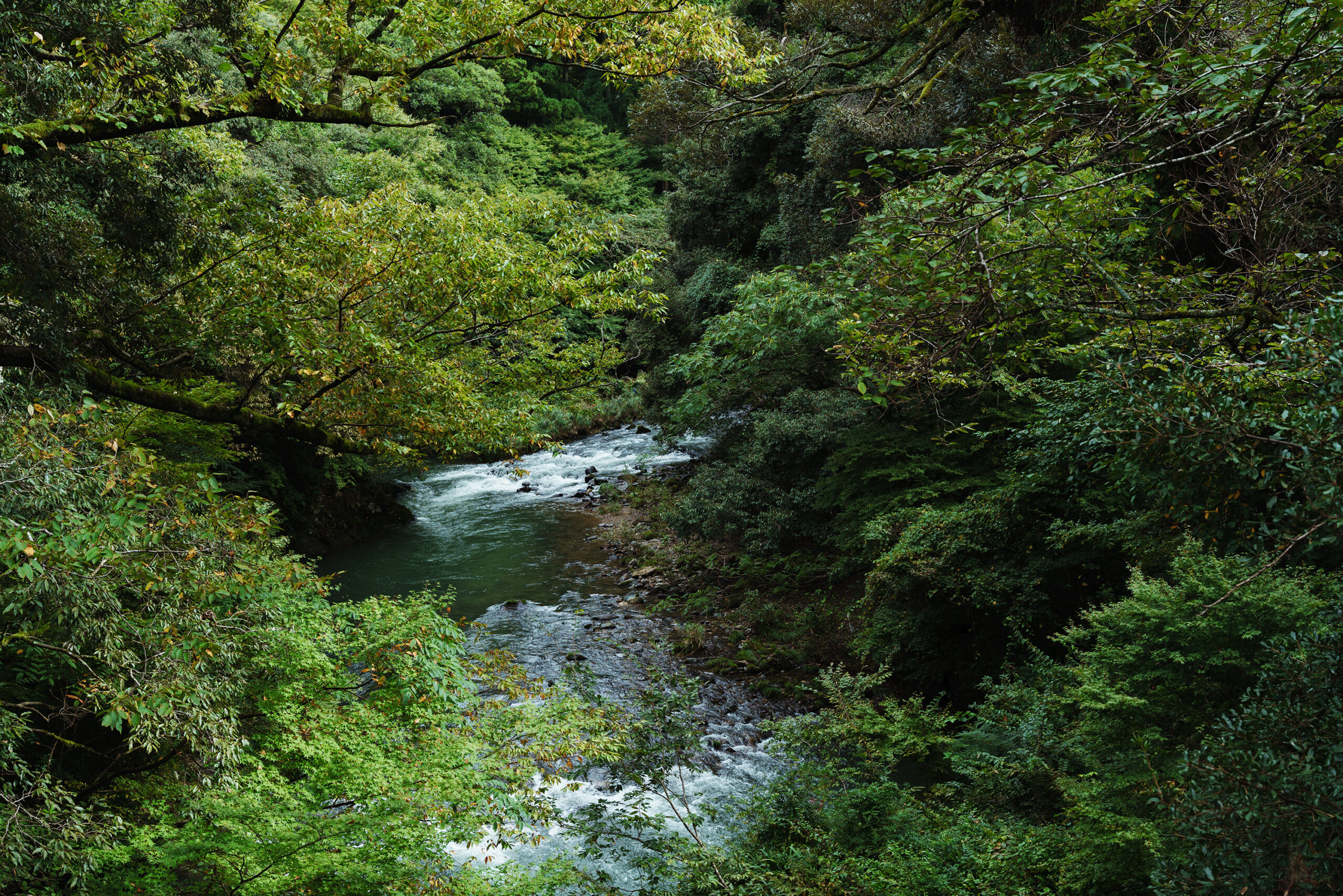
Fukawa Sonose, Nagato, Yamaguchi Prefecture. Five Fukawa-Hagi klins form a quiet cluster here. The Sakakura Shinbe-gama Kiln stands at the top of the slope, overlooking the gentle landscape of Sonose below
As an artisan, I naturally have a certain level of knowledge and understanding when it comes to ceramics, including Hagi ware. However, when it comes to works that are somewhat removed from my own field, for example pieces from entirely different production areas or other crafts such as lacquer, I sometimes find that it becomes surprisingly difficult to judge what is truly good. Through conversations with various people, there have been moments when their ways of seeing and their sensibilities have caught me off guard. Those perspectives can be quite striking and eye-opening.
At the same time, when it comes to the Hagi ware I create, there are moments when I wonder whether it is not being communicated as fully as I had hoped. I believe that letting the work speak for itself is a virtue in Japan. However, I sometimes feel that relying on that alone may not be enough. The way people who love craft perceive a work can be quite different from the way people active in other fields perceive it. When the same object can evoke entirely different responses, I realize that I need to clearly convey the core of my ceramics, the standards by which I evaluate them, and the values that I consider essential.
Our kiln is no exception, but in the world of tea ceramics there is often a shared understanding within each school of tea that a particular kiln or artist creates work in a certain way. In this world, I am grateful that simply by working sincerely, one’s approach and values came to be understood to a certain extent. However, I feel that artists of the next generation, like us, may need to communicate more broadly to the wider public, including with regards to the very form and role of tea itself. It seems increasingly important not only to continue the tradition, but also to articulate and share its meaning beyond the established circle of those who have traditionally been most connected to it.
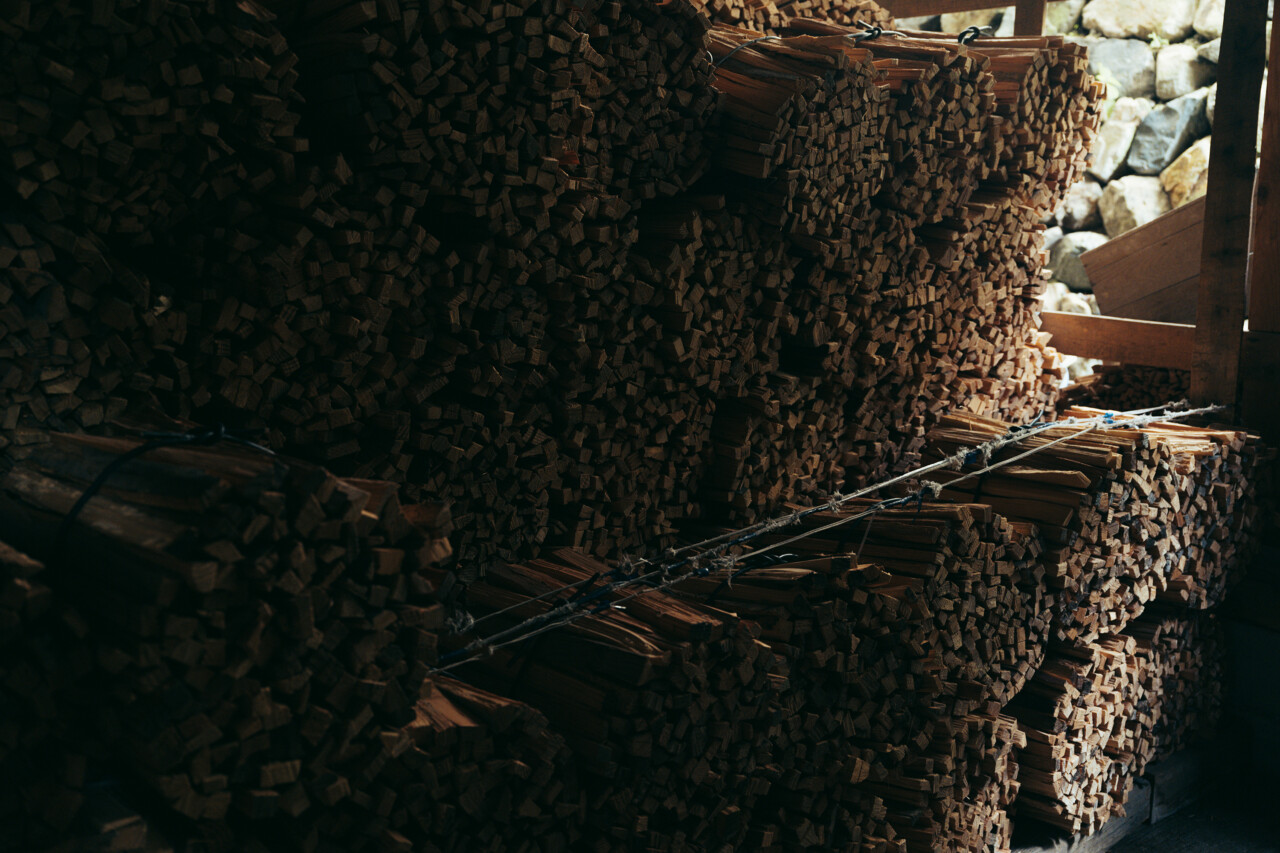
Firewood prepared for the kiln firing
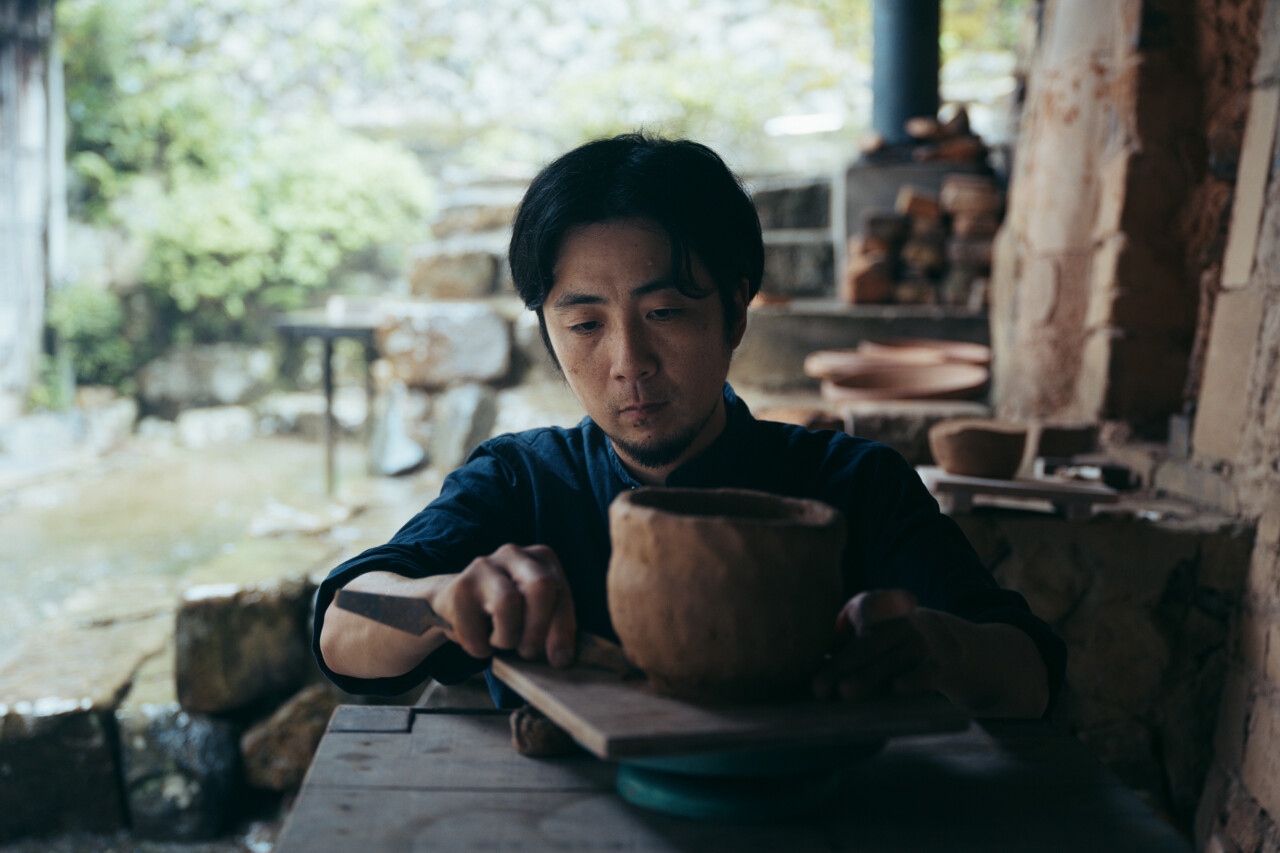
Carefully carving and refining the form
Exhibitions overseas. While I am still in my forties, I would like to do as much as I can and take on as many opportunities as possible.
I do not think in terms of Japan versus overseas all that strongly. However, I do feel that people abroad tend to look at the work with fewer preconceptions. I am very interested in how the work appears when it is seen in a completely fresh state. I often find that I am stimulated and learn a great deal from those reactions.
If I were to speak about what I hope to convey, it would be what kind of ceramics Hagi ware truly is and the background from which it emerged. I would be happy if that could serve as a gateway for people to encounter the depth of Japanese culture. Historically, Hagi ware traces back to the Sengoku period, a time of civil war in Japan from the late 15th to the early 17th century, and as tea ceramics it is also connected to the tea ceremony, which forms one of the foundations of Japanese aesthetics. As one entry point into Japanese culture, I believe there are truly many elements that people can enjoy and explore from there.
At the same time, I would hope to present it not as something old or merely historical, but as a living craft that exists in the present day.
Sakakura Shinbe-gama Kiln
A kiln of Fukawa-Hagi ware based in Nagato, Yamaguchi Prefecture. Sakakura Shinbe-gama Kiln is one of the leading Hagi kilns, tracing its lineage to the official kiln of the Hagi domain established in the early Edo period. The kiln has passed down its techniques and traditions through successive generations, following its founding by the first generation head of the kiln was Yi Chak-kwang, a Korean potter invited to Japan by Mori Terumoto. In particular, Shinbe Sakakura XII, regarded as the restorer of the lineage, is known for elevating Hagi ware as tea ceramics to a highly artistic level. In 2024, the 16th generation inherited the name.