
“Nosou™,” A New Brand Rooted in Natural Materials and Craftsmanship, Unveils Bamboo Lighting Collection
New Products VOL.30
VOL.1-30
Update
VOL.1-65
Update
VOL.1-5
Update
VOL.1-32
Update
VOL.1-8
Update
VOL.1
Update
VOL.1-27
Update
VOL.1-4
Update

VOL.1-3
Update
We share a variety of information and perspectives on Japanese crafts, including exhibition information and interviews.
New Products VOL.30
New Products VOL.29
Featured Exhibitions & Events VOL.65
Editor's Column “The Path of Japanese Crafts” Part2: Modern Society and Kogei VOL.5
Sep 5 – Nov 8, 2026
SEIKADO BUNKO ART MUSEUM
Sep 11 – Sep 16, 2026
KAKIDEN GALLERY
Sep 12 – Sep 20, 2026
essence kyoto
Sep 12 – Nov 23, 2026
Mitsui Memorial Museum
In today’s society, more and more people are seeking a chance to retreat. Inns and facilities built around the concept of retreat are opening one after another, while Unyoked, an Australian startup, has gained popularity by placing cabins on the outskirts of cities such as Sydney and London, offering urban dwellers an opportunity to step away from the demands of everyday life. A society in which people feel the need to escape from their daily routines can hardly be called entirely healthy. Yet the growing popularity of retreats may also be seen as a sign that people are seeking to restore balance in their lives and address the subtle distortions that have emerged in modern society.
To begin with, it is important to recognize that a retreat is fundamentally different from an ordinary vacation or a restful getaway. The word “retreat” itself does not directly imply healing or relaxation. While a retreat may ultimately bring a sense of physical and mental renewal, it is worth noting that not every trip to a beautiful natural setting with family or friends, enjoying good food and entertainment, can simply be called a retreat.
Nor are retreats something designed only for those who live in cities. For example, when someone exhausted by the close-knit social relationships of rural life seeks the anonymity and distance of an urban environment, that too can be considered a form of retreat. With this in mind, I would like to explore what kind of retreat is truly needed for people living in the modern world.
The word retreat is said to derive from the Latin retrahere, meaning “to draw back,” “withdraw,” or “retreat.” Historically, the term was also used in military contexts. In times of war, there are moments when an army must withdraw, even if it means leaving the front lines behind. When we imagine such a tense and urgent situation, it becomes clear that the essence of retreat lies in stepping away from the “front lines” where one is engaged in daily struggles and responsibilities.
Practices resembling retreat have also been found across various religious traditions. In Christianity, for example, gatherings that provide an opportunity to step away from everyday life and engage in self-reflection through prayer and contemplation are known as retreats. The term itself is commonly used in English in this religious context.
In recent years, growing numbers of people have sought relief from the mental and physical strain associated with digital devices and social media. As a result, temporarily distancing oneself from these technologies and engaging in practices such as meditation and mindfulness has become increasingly popular. Within this broader movement, retreats have gained renewed attention, particularly among urban dwellers navigating lives saturated with information.
The word retreat is often confused with retreatment, yet the two have different origins. The word treatment derives from the French traiter, meaning “to heal.” In that sense, retreatment literally means “healing again” or “undergoing treatment once more.” Those who seek retreat, however, are not necessarily suffering from illness or distress. If retreats, including those practiced within various religious traditions, were to be understood solely as a form of treatment, they might appear somewhat excessive. Stepping away from everyday life and taking time for self-reflection is less a matter of treatment than of prevention. By engaging in retreat on a regular basis, we may be better able to make subtle adjustments to the way we relate to an increasingly complex society.
Life in the modern city leaves little room for emptiness. Any spare moment is quickly filled by a smartphone, and checking a screen while waiting has become second nature for many people. We live in an age where simply sitting on a bench at a train station or in a park, doing nothing at all, can seem unusual, or even invite suspicion.
We are constantly connected to the internet, and even after we fall asleep, we remain linked in some way to other people somewhere in the world. Whether our minds actively process it or not, we are almost always connected to something. Seen in this light, finding true silence in our time is no easy task. Silence is not merely the absence of sound. It is a state in which a place itself feels still, and the minds of those within it have also come to rest. A modern retreat is, in part, an act of stepping away from the busyness of everyday life and placing oneself in such an environment. Perhaps it is the pursuit of this kind of silence that explains why retreats have become increasingly important in contemporary society.
People who feel that their daily lives are not going well are sometimes too deeply absorbed in the individual events unfolding before them. If a brief moment of rest in everyday life allows us to take one or two steps back, then a retreat invites us to step back even further and take in the larger picture. From that vantage point, each individual concern begins to seem much smaller. When viewed from the upper floors of a tall building, for example, the movements of cars and people on the ground appear remarkably slow and calm. Even a high-speed train, seen from the sky, looks little more than a line moving across the landscape. Those who navigate life with composure are often able to maintain this broader perspective. They can respond to challenges without becoming consumed by them, and they are even able to recognize when it is time to retreat by viewing their circumstances from a distance. To step back is also to change one’s perspective. In retreat, it is precisely this shift in perspective that holds such profound value.
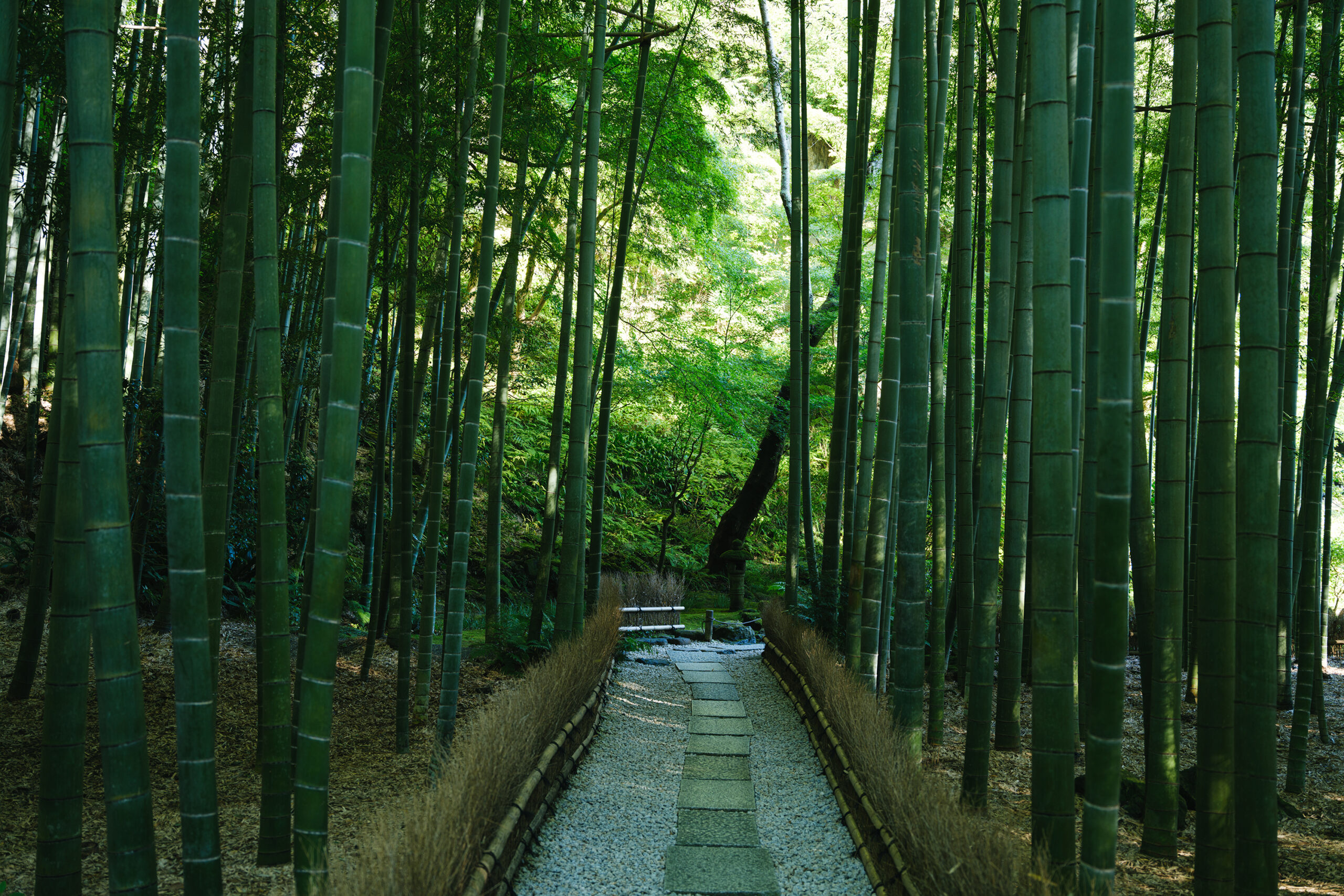
For this reason, if you find yourself longing to step away from the routines of everyday life, it is not enough simply to seek out a quiet place. More importantly, you should seek a state in which you can create distance from the many specific concerns and distractions that occupy your attention. Turn off the digital devices that deliver an endless stream of information in an instant. Step away from what lies immediately before your eyes, and allow yourself to look into the distance. In this sense, spending time in nature remains one of the most effective forms of retreat. By placing yourself in a natural environment and minimizing the stimuli of contemporary digital life, you may begin to see your everyday existence from afar. And it is through that distance that a clearer perspective on your life can emerge.
What role does Japan have to play in the modern retreat? Japan’s abundant natural landscapes and the changing seasons alone offer something deeply meaningful for people seeking retreat. Moreover, Japan’s view of nature, rooted in the concept of yaoyorozu no kami (the belief that countless spirits or deities dwell throughout the natural world), reflects a unique sensibility that finds mystery and wonder in nature itself. For visitors from abroad, encountering this perspective may itself become a reason to seek retreat in Japan.
On the other hand, the way people experience retreat varies greatly from person to person. As mentioned earlier, a person living in the countryside may find retreat in escaping to the city. Likewise, stepping away from physical reality and immersing oneself in a virtual world could, in some sense, be considered a distinctly modern form of retreat. If we define retreat as creating significant distance from one’s current environment and gaining a different perspective, then these too may be regarded as forms of retreat. Yet in contemporary society, many people find themselves overwhelmed by digital devices, and increasingly, retreat has come to mean stepping away from them. In such an age, finding new perspectives through nature becomes especially important. As a place for such experiences, Japan holds remarkable potential. With forests covering approximately 67 percent of its land, it offers an environment uniquely suited to retreat.
I believe that the ultimate destination of the modern retreat movement is the search for the perfect hideaway, a place uniquely suited to each individual. Not so long ago, many people living in cities had a hometown to which they could return. The act of going home itself served as an important form of retreat. Young people who had left rural areas for urban life were often sustained by the words of parents and relatives who told them, “You can always come home if things become too difficult.” Encouraged by that reassurance, they worked hard to build lives for themselves in the city. And when the demands of urban life became overwhelming, they would retreat to their hometowns. In some ways, there is a resemblance between this act and a soldier withdrawing from the battlefield. Viewed from another perspective, perhaps the growing interest in retreat reflects the gradual loss of the very thing once known as “home.” It may be because so many people no longer have such a place to return to that retreat has become an increasingly important idea in contemporary society.
Retreat is not simply about finding a quiet place in which to calm the mind. It may be part of an evolutionary process that enables us to navigate an increasingly complex society. To step away from where we are, and in doing so gain a new perspective. Seen in this light, the figure of one who retreats resembles not a soldier fleeing in fear, but a courageous traveler setting out with hope for the future. No matter how challenging the age we live in may become, we must continue to make our way through it. And the future we hope for is something we must create with our own hands. If that is what retreat is for, then it is no longer merely an act of withdrawal. It is a meaningful step toward the future.
References
Zorn, Justin, and Leigh Marz. Seijaku no Giho: Sairyo no Jinsei o Michibiku “Shizukesa” no Chikara (Toyo Keizai Inc.)
English title: Golden: The Power of Silence in a World of Noise. (HarperBusiness)
WIRED Japan Vol. 48: RETREAT (Escape Toward the Future / Mirai e no Dakkyaku) (Condé Nast Japan)